

AI-First SEO in 2026: How to Optimize Your Website for Google AI Overviews and ChatGPT

Google AI Overviews reduce organic clickthroughs by up to 58%. Classic SEO is no longer enough. In this article, we’ll show you concrete steps to adapt your website, content, and technical SEO to the new reality where AI answers replace traditional search results.
Searching in 2026 no longer looks like you know it
Open Google and type any informational question. The first thing you will see is not a list of ten blue links. It is an AI Overview, a generated answer that summarizes information from multiple sources directly on the results page. Below it are the classic results, but according to current data from Ahrefs (February 2026), only 8% of users click on an organic result when an AI Overview is present. Without it, it is 15%.
– https://ahrefs.com/blog/ai-overviews-study/
At the same time, ChatGPT is growing, which has over 5 billion visits per month and has become the fourth most visited website in the world. Approximately 31% of prompts in ChatGPT trigger a web search, meaning that AI assistants are becoming a fully-fledged search channel.
– https://www.semrush.com/blog/ai-seo-statistics/
For companies and their websites, this signifies a fundamental change. It is not enough to be on Google's first page. You must be a source that AI cites.
What are AI Overviews and generative search
Google AI Overviews are answers generated by artificial intelligence directly in search results. Google analyzes several web sources, synthesizes an answer from them, and displays it at the top of the page along with links to the cited sources. AI Overviews currently appear in about 16% of all queries, with almost 90% of them being informational in nature.
– https://www.semrush.com/blog/semrush-ai-overviews-study/
Google AI Mode goes even further. It functions as a conversational interface similar to ChatGPT, where the user dialogues with the AI directly in Google. Since October 2025, it has been available in over 200 countries.
ChatGPT with search integrates web results directly into the conversation. When users ask a question with local or commercial intent, ChatGPT automatically searches for current information on the web in 59% and 41% of cases, respectively.
Perplexity, Microsoft Copilot, and other AI assistants operate on the same principle: instead of providing links, they provide answers with citations.
Result? Organic traffic is declining. Analysts predict a drop in organic search of up to 25% by the end of 2026. However, a new metric is emerging: being cited in an AI response.
How AI search is changing the fundamentals of SEO
From keywords to topical authority
Traditional SEO worked simply: find a keyword, write an article, gain a position. In 2026, that is not enough. Google and ChatGPT evaluate not only a specific page but the entire domain and its ability to cover the topic in depth.
Websites that systematically cover the entire thematic area through interlinked articles (topic clusters) rank significantly better. The February 2026 Core Update from Google explicitly strengthened the signal of topical authority: websites with deep expertise in a narrow field are gaining better positions than generalists.
– https://www.digitalapplied.com/blog/google-february-2026-core-update-seo-guide
From clicks to citations
A new metric of success is not just position in searches but whether AI cites you in its answer. According to data from Ahrefs, 76.1% of URLs cited in AI Overviews come from the top 10 organic results. This means that classic SEO still forms the basis, but it no longer guarantees visibility on its own.
Interestingly, ChatGPT and Google AI Mode cite from a much broader spectrum of sources. Even pages not in the top 10 can make it to the AI response if they provide contextually relevant and unique information.

E‑E‑A‑T and content quality in the era of AI
E‑E‑A‑T (Experience, Expertise, Authoritativeness, Trustworthiness) is not a direct ranking factor. It is a framework according to which Google assesses the quality of content. In 2026, its importance is greater than ever because AI systems prioritize content with high E‑E‑A‑T scores when selecting sources to cite.
– https://developers.google.com/search/docs/fundamentals/creating-helpful-content
What this means in practice
Experience: Google wants to see that the content author has real, personal experience with the topic. Not theory copied from another article, but their own insights, tests, and case studies. For a web agency, this means publishing case studies with real results, not generic descriptions of services.
Expertise: The content must be technically accurate and detailed. Superficial articles that cover a topic in 300 words are ignored by AI systems. According to SE Ranking, articles over 2,900 words average 5.1 citations in ChatGPT, while articles under 800 words only get 3.2 citations.
Authoritativeness: This is built through brand mentions on other websites, quality backlinks, and a consistent presence in the given thematic area. In February 2026, Google launched a new "Authors" section in Search Central documentation, indicating a growing emphasis on author transparency.
Trustworthiness: The most important pillar according to Google itself. SSL certificate, clear contact information, transparent business conditions, and verifiable claims in content.
Example from practice: local service vs. e-commerce
Before optimization: A local heating service had a website with 5 subpages without a blog. Generic descriptions of services, no references, no author information. It appeared on the 2nd page of search results. There was no presence in AI Overviews.
After optimization for E‑E‑A‑T: We added a section "Our Experiences" with case studies of real installations, a blog with expert articles on heating and maintenance, an author page for the owner with certifications and 15 years of experience, and structured data for LocalBusiness. Result: position 3 for the main keyword, citation in Google AI Overview for 4 out of 10 relevant queries in the region.
Content strategies for obtaining AI citations
AI systems do not read content like people. They extract facts, answers, and structured information. For your content to be cited, it must be written and structured so that relevant answers can be easily extracted from it.
1. Topic clusters instead of isolated articles
Create one pillar page that covers the topic comprehensively and link it to detailed articles on individual subtopics. For example, for an e-shop with electronics:
Pillar page: "How to choose a laptop in 2026"
Cluster articles: "Best laptops under €800", "Laptop for programming: what to watch out for", "Comparison of Intel vs. AMD processors for the average user", "How much RAM do you need in 2026"
Each article links back to the pillar page and vice versa. This builds topical authority, which AI systems evaluate as a signal of expertise.
2. Question headings and FAQ sections
According to SE Ranking, pages with question headings and FAQ sections have significantly higher chances of being cited in ChatGPT. Formulate headings as real questions that people ask:
Instead of: "Our services" → "How much does website creation cost in 2026?"
Instead of: "About us" → "Why choose a web agency over a freelancer?"
3. Correct length and structure of sections
Pages with sections of 120 to 180 words between headings gain about 70% more citations in ChatGPT than pages with very short paragraphs (under 50 words). AI needs enough context to extract a quality response.
4. Regular content updates
Content updated in the last 3 months has an average of 6 citations compared to 3.6 for outdated content. Set a regular update cycle for the most important pages, at least once a quarter.
Checklist: Content strategy for AI citations
- Do you have pillar pages for your main topics?
- Are the headings formulated as questions that people actually search for?
- Does each section have 120 to 180 words with a clear answer?
- Does the website include an FAQ section with structured data?
- Do you publish new content at least twice a month?
- Do you update existing articles at least once a quarter?
- Does the content contain original data, case studies, or personal experiences?
Technical SEO for AI Overviews
Quality content without a technical foundation will not work. AI systems can only extract information from websites that are technically sound and indexable.

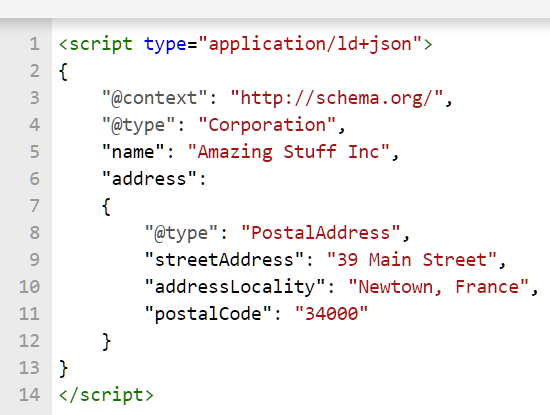
Schema markup (structured data)
Structured data helps Google accurately understand what your page is about. For AI Overviews, the following types of schemas are key:
FAQPage for pages with frequently asked questions.
HowTo for guides and procedures.
Article with an exact publication and update date.
LocalBusiness for local businesses (address, opening hours, contact).
Organization with contact details and social profiles.
Product for e-shops with prices, availability, and ratings.
– https://developers.google.com/search/docs/appearance/structured-data
Internal linking
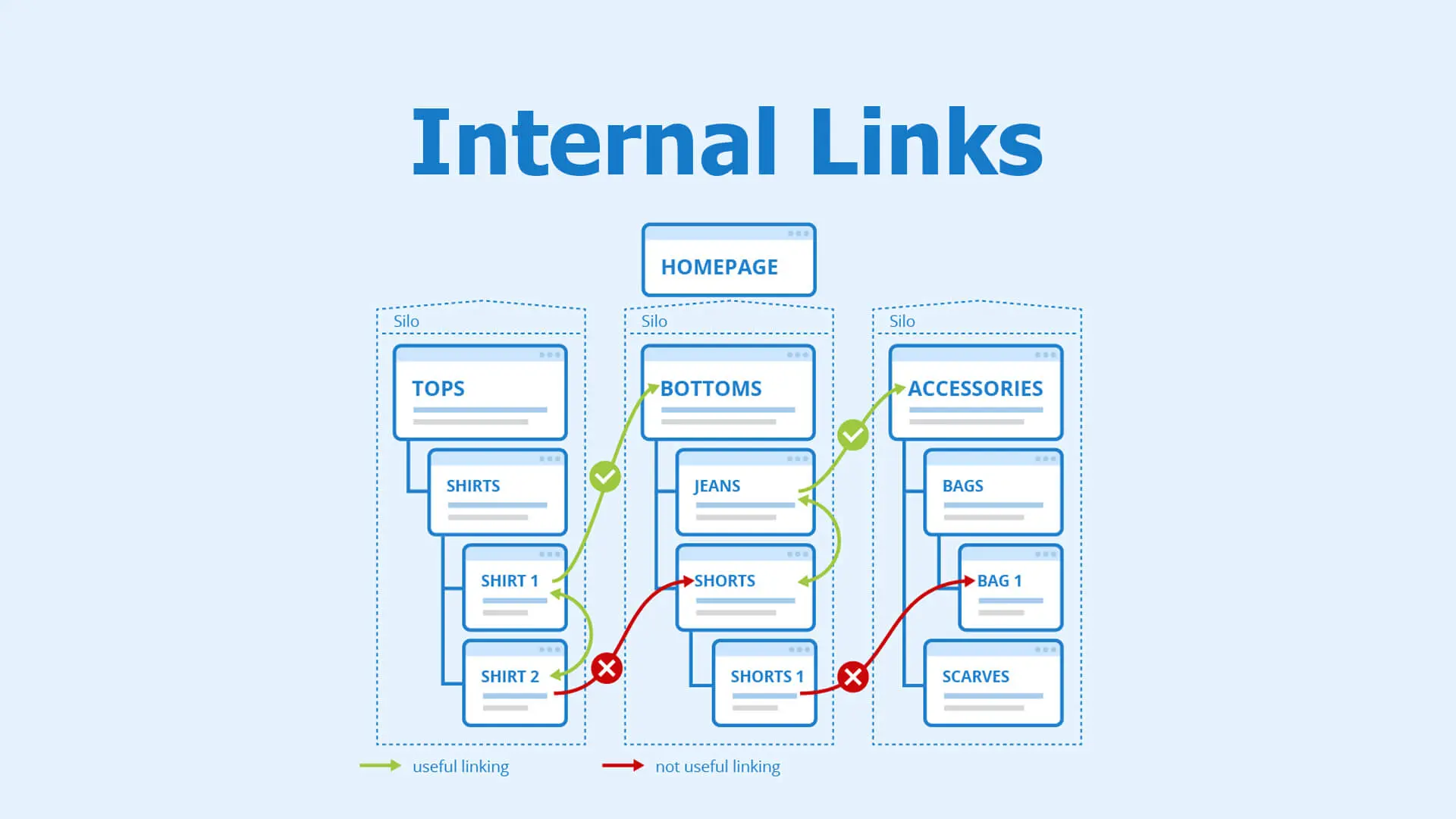
Linked topic clusters with clear anchor texts help AI systems understand the relationships between pages. Each page should have at least 3 to 5 internal links to related pages.
Loading speed and Core Web Vitals
Google still uses Core Web Vitals as a ranking signal. For AI Overviews, speed is important for two reasons: fast websites rank better (and 76% of cited sources come from the top 10) and user engagement on fast websites is higher, which strengthens quality signals.
Mobile optimization
Most searches happen on mobile devices. A website that is not perfectly responsive loses not just visitors but also the chance to be cited in AI responses.
Crawlability and clean architecture
Google's John Mueller confirmed that for AI systems, clean HTML is sufficient. You do not need to create special Markdown or JSON versions of pages. What is important is to have a logical URL structure, a functioning sitemap, correctly set canonical URLs, and no orphan pages (pages without internal links).
Checklist: Technical SEO for AI
- Is schema markup implemented on all key pages?
- Internal linking with descriptive anchor texts?
- Core Web Vitals are in green values?
- Mobile version without layout shift and with fast loading times?
- Is the XML sitemap current and submitted in the Search Console?
- Are canonical URLs correctly set on all pages?
- Does robots.txt block important content?
UX and engagement signals
AI search optimizes for results that are useful and engaging for users. This means that Google tracks what happens after a click. If a user clicks on a result and immediately returns (pogo-sticking), it is a negative signal. If they stay, scroll, and interact, it is a signal of quality.
Clear structure and navigation
A user must know within 3 seconds what the page offers and where to find the answer to their question. Clean design, logical navigation, and a clear hierarchy of information are not a luxury. They are essential.
Strong CTAs (calls to action)
Every page should have a clear next step for the visitor: contact form, order, download materials, or further reading. CTAs reduce bounce rates and increase engagement.
Interactive elements
Calculators, configurators, product filtering, interactive FAQs. These elements increase dwell time and signal to Google that the page provides real value beyond static text.
Example from practice: e-shop with electronics
Before: Product pages with short descriptions, one photo, and a "Buy" button. Average time on page: 28 seconds. Bounce rate: 72%.
After: We added a video review, a comparison table with competing products, an FAQ section with common questions, and an interactive configurator for accessories. Average time on page: 2 minutes 14 seconds. Bounce rate: 41%. Conversion rate increased by 23%.
How web agencies can prepare clients for AI-first SEO
AI-first SEO is not a one-time optimization. It is a strategic shift in how you approach the website, content, and overall online presence. As a web agency with experience in creating high-performance websites, e-shops, and web applications, we see that companies that adapt sooner will gain a significant competitive advantage.
AI SEO audit
The first step is to find out where you stand. A comprehensive audit includes analyzing current visibility in AI Overviews and ChatGPT, technical SEO (schema, speed, mobile optimization, crawlability), content analysis (E‑E‑A‑T signals, topical coverage, timeliness), UX audit (engagement, bounce rate, conversion paths), and competitive analysis (who is being cited in AI responses in your industry).
Custom content strategy
Based on the audit, we will propose a content plan with topic clusters, a publishing calendar, and guidelines for updating existing content. Each article and page has a clear goal: to be cited in AI responses for specific queries.
Technical implementation
From schema markup to speed optimization and setting up internal linking. Technical SEO is the foundation on which everything else stands.
Continuous monitoring and optimization
AI search is changing rapidly. What works today may not work in three months. Regular monitoring of citations, analyzing new AI features, and ongoing optimization are essential.
Conclusion: AI-first SEO is not a trend. It is a new reality.
Search has changed. Google AI Overviews are reducing organic clicks by 58%. ChatGPT has become a fully-fledged search channel. Traditional SEO tactics alone are no longer sufficient.
Companies that adapt will be cited in AI responses, will build authority, and will attract customers even in an environment where classic clicks are declining. Companies that wait will gradually lose visibility.
The key is to start now. Not in a year, not in a quarter. Now.
Do you want to know how your website is performing? Order an AI SEO audit and find out where you have gaps and what specific steps will bring results. Write to us at hello@metinas.com or schedule a free consultation call, or get to know the solutions we have already developed: https://www.metinas.com/sk


Selected projects
Novanta Prievoz
Category
Custom Development
Client
Proxin s.r.o.
Duration
3 weeks

Harbor Equity
Category
Website Creation
Client
Harbor Equity a.s.
Duration
2 weeks
