
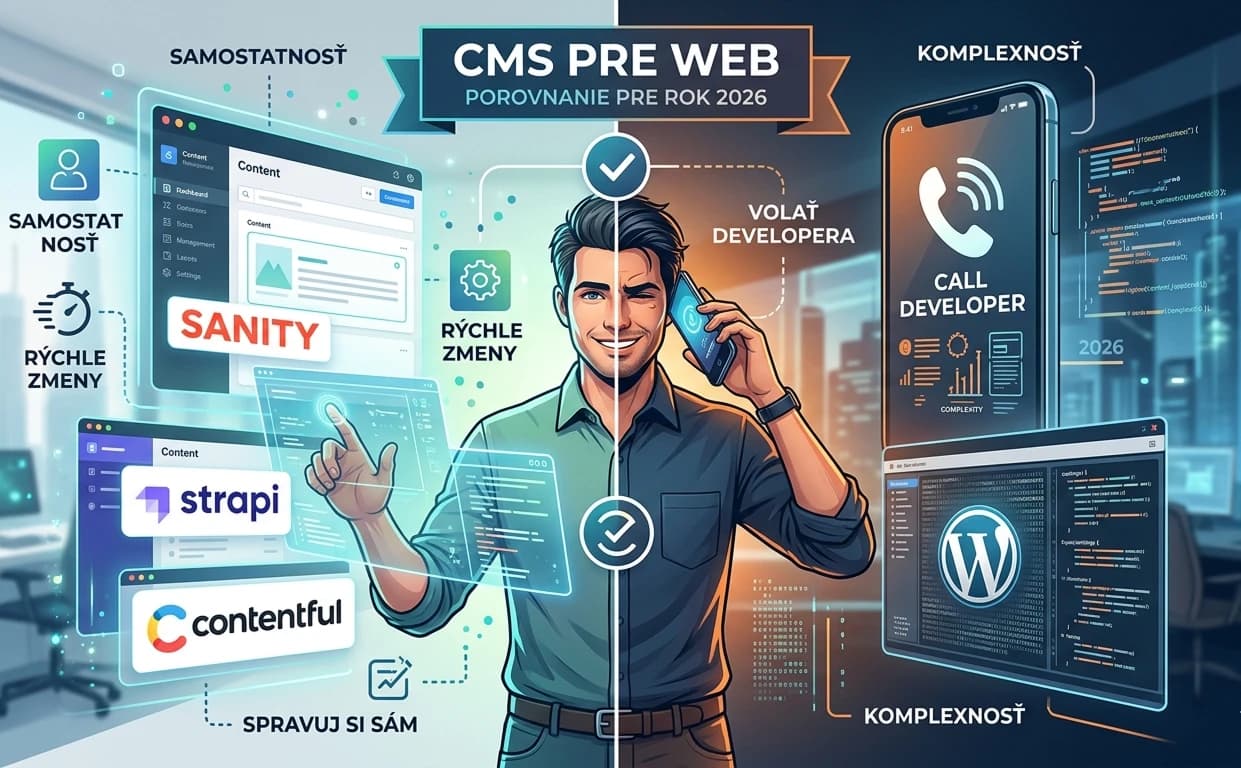
CMS for the web: Sanity, Strapi, Contentful or WordPress?

Choosing the right content management system determines whether you will manage the content yourself or call a developer for every change. A comparison for 2026.
CMS for the web: Sanity, Strapi, Contentful or WordPress?
Someone told you that you need a CMS. Or you came to the conclusion through Google that WordPress is outdated and Sanity is the future. Or on the contrary – a developer suggested Strapi to you and you don’t know what it is.
A CMS (Content Management System) is a tool through which you manage content on the web without needing to know how to program. The right choice will save you years of frustration – a bad one will haunt you with every update. And today, the options are really diverse.
We will look at the four most common solutions in 2026: WordPress, Sanity, Strapi, and Contentful. For each, we will analyze who it is ideal for and where it has its limits.
Why choosing a CMS matters more than you think
Imagine you bought a car but you don’t have the keys. That’s somewhat how a website looks without a CMS – or with a CMS that no one in the team knows how to use.
A bad CMS costs companies money every day: a developer has to change texts, launching new content takes a week, or the content cannot be personalized for different markets. According to Gartner Digital Markets, an impractical CMS is one of the top 3 reasons why companies undergo costly website redesigns before three years.
A good CMS gives you autonomy: content is changed by the marketer, not the developer. And the hours saved from the developer mean either lower costs or faster progress.
WordPress – still the king, but with conditions
WordPress powers 43% of all websites on the internet according to W3Techs (as of 2025). This is no coincidence – for many cases, it is still the best choice.
Who is WordPress ideal for:
- Small and medium businesses with classic websites (5-50 subpages)
- Blogs and content websites with regular publication
- Projects where the client wants to manage content themselves without technical knowledge
- Websites with a limited budget (the plugin ecosystem reduces development costs)
Where WordPress has weaknesses:
- Security: WordPress is the target of 90% of attacks on CMS systems (Sucuri Web Hacked Report) – it requires regular updates and security plugins
- Performance on large websites: without proper optimization (caching, CDN), WordPress slows down
- Scalability for complex applications: if you need custom data structures, you will hit limits
Technical stack: PHP + MySQL, hosting anywhere, vast ecosystem of plugins (60,000+ in the official directory)
Sanity – a headless CMS for modern projects
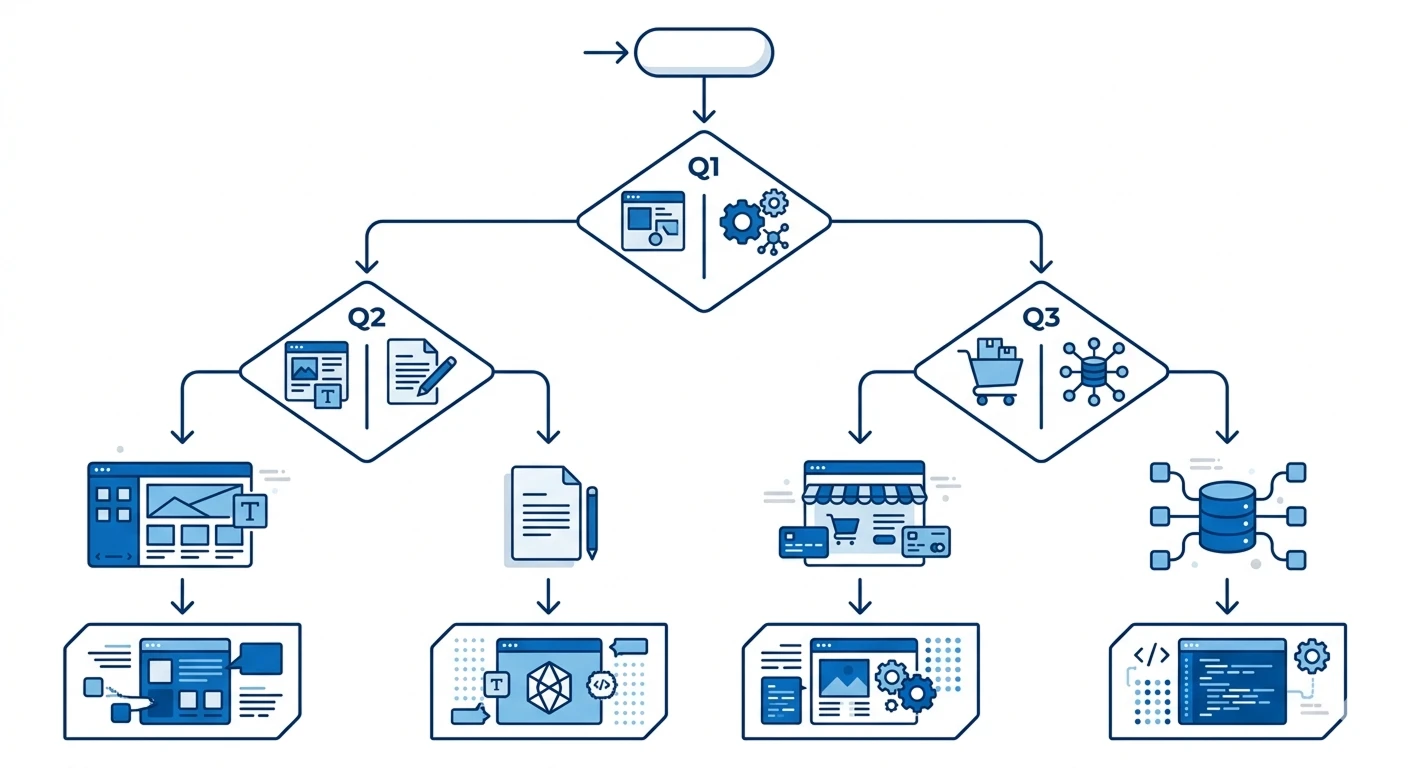
Sanity is a so-called headless CMS – this means it separates content from presentation. Editors manage content in Sanity Studio, the frontend (Next.js, React, mobile application) retrieves content via API. Presentation and content are completely independent.
Who is Sanity ideal for:
- Websites and applications built on Next.js, Remix, or similar modern frontends
- Projects with complex data structures (nested content, multilinguality, variants)
- Companies that want a single source of content for web, mobile app, and other channels
- Teams where editorial flexibility and developer experience are priorities
Where Sanity has weaknesses:
- Higher technical barrier to set up – it’s not a “install WordPress and go”
- Cost for higher volume of API requests (the free plan has limits, Sanity pricing)
- Editors need a brief training – the Sanity Studio interface is different from the classic WP editor
Technical stack: Sanity Studio (React), GROQ query language, REST/CDN API, works with any frontend
Strapi – open-source headless CMS that you host yourself
Strapi is an open-source headless CMS – like Sanity, it separates content from presentation, but runs on your own server. You have full control over your data without monthly fees for SaaS.
Who is Strapi ideal for:
- Companies with sensitive data that don’t want to store content with an external provider
- Projects with their own backend, where the CMS must coexist with additional logic
- Teams with developer capacity – Strapi requires server management and updates
- MVP and startup projects where open-source reduces entry costs
Where Strapi has weaknesses:
- Self-hosting = responsibility for security, backups, and performance falls on you
- The plugin ecosystem is smaller than WordPress
- Under heavy load (hundreds of thousands of content), it can be slower than cloud alternatives
Technical stack: Node.js, REST/GraphQL API, PostgreSQL/MySQL database, Docker deployment
Contentful – enterprise headless CMS
Contentful is a cloud-based headless CMS aimed at larger teams and enterprise clients. It has advanced features for team management, preview environments, localization, and content modeling.
Who is Contentful ideal for:
- Larger companies with an editorial team (5+ people working with content simultaneously)
- Projects with complex international localization (20+ languages)
- Organizations needing integration into existing enterprise systems (Salesforce, SAP)
Where Contentful has weaknesses:
- Cost: the free plan is very limited, paid plans start from $300/month (Contentful pricing)
- It’s a “cannon for sparrows” for small projects
- Vendor lock-in – data is with Contentful, migration is costly
Technical stack: cloud SaaS platform, REST/GraphQL API, webhooks, integrations through Marketplace
Comparison at a glance
How to decide – 3 questions
1. Who will manage the content? If it's a marketer without technical skills → WordPress or Contentful. If it's a developer or a technical editor → Sanity or Strapi.
2. What is the budget for infrastructure? If you want to minimize monthly costs → WordPress (cheap hosting) or Strapi (self-hosted). If you don’t mind SaaS subscription for comfort → Sanity or Contentful.
3. Is the website an isolated product or part of a larger system? If the website stands alone → WordPress or Sanity. If the website is one of several channels (mobile app, kiosk, API) → Sanity or Contentful.
Conclusion
There is no one right CMS for everyone. WordPress is still an excellent choice for most small and medium websites – but if you are building a modern web application, a multi-channel presentation, or a B2B portal, a headless solution like Sanity or Strapi will give you the flexibility that WordPress cannot provide.
If you're unsure which CMS is right for your project, describe to us what you need – we will propose a solution based on real requirements, not trends.


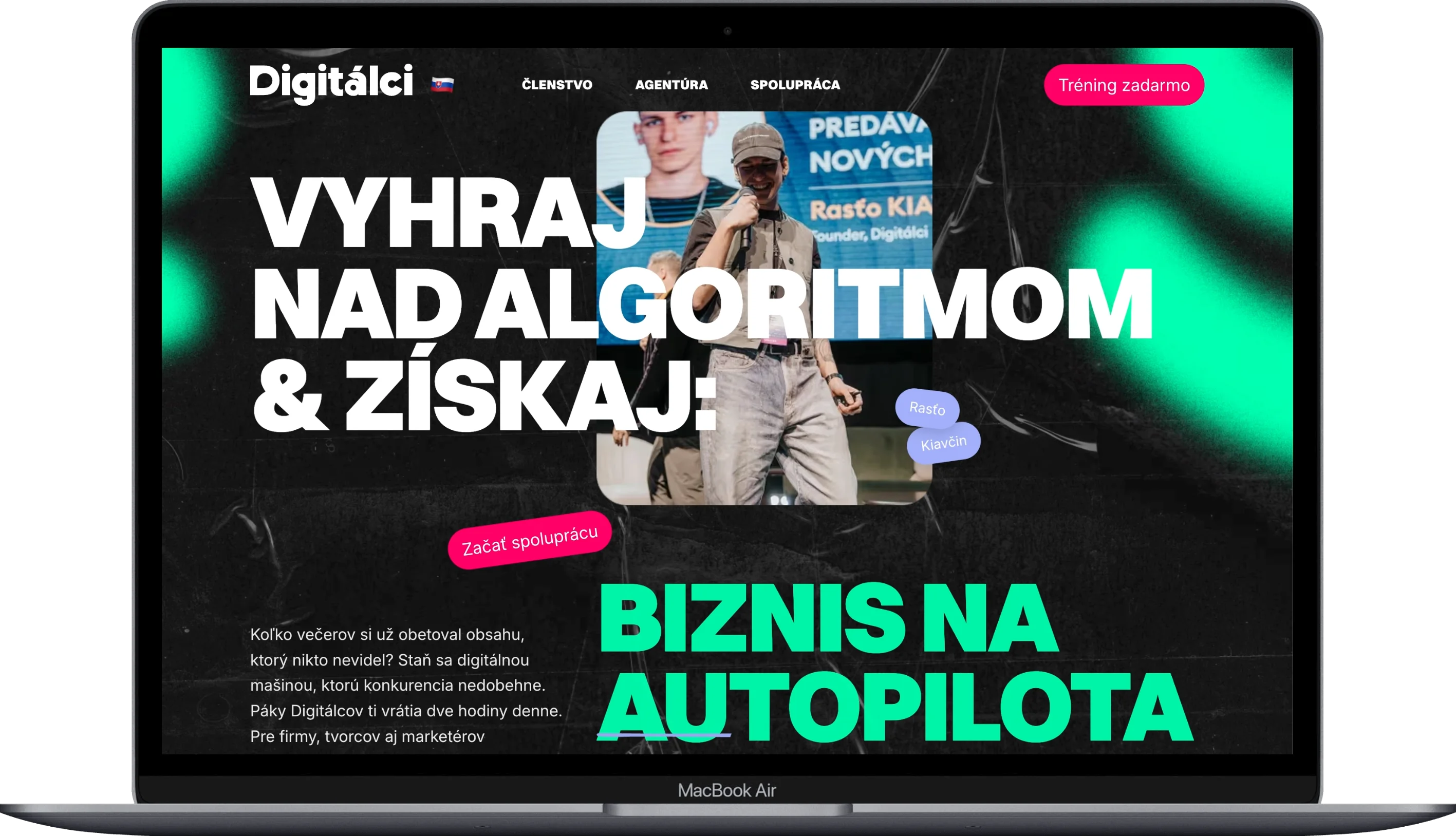
Selected projects
kiavcin.sk
Category
Website Creation
Client
kiavcin.sk
Duration
1 month
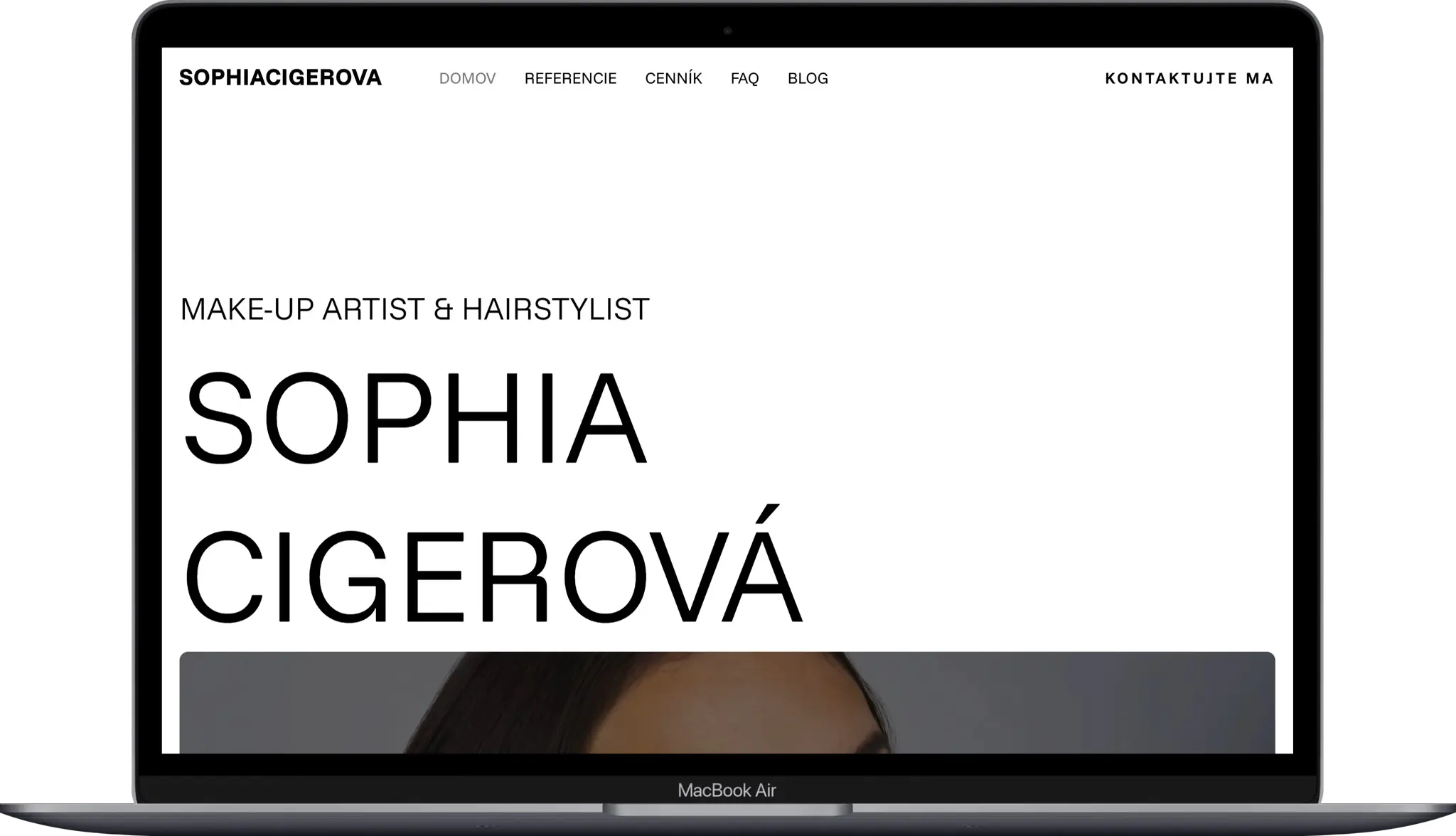
Sophia Cigerova
Category
Website Creation
Client
Sophia Cígerová
Duration
1 week
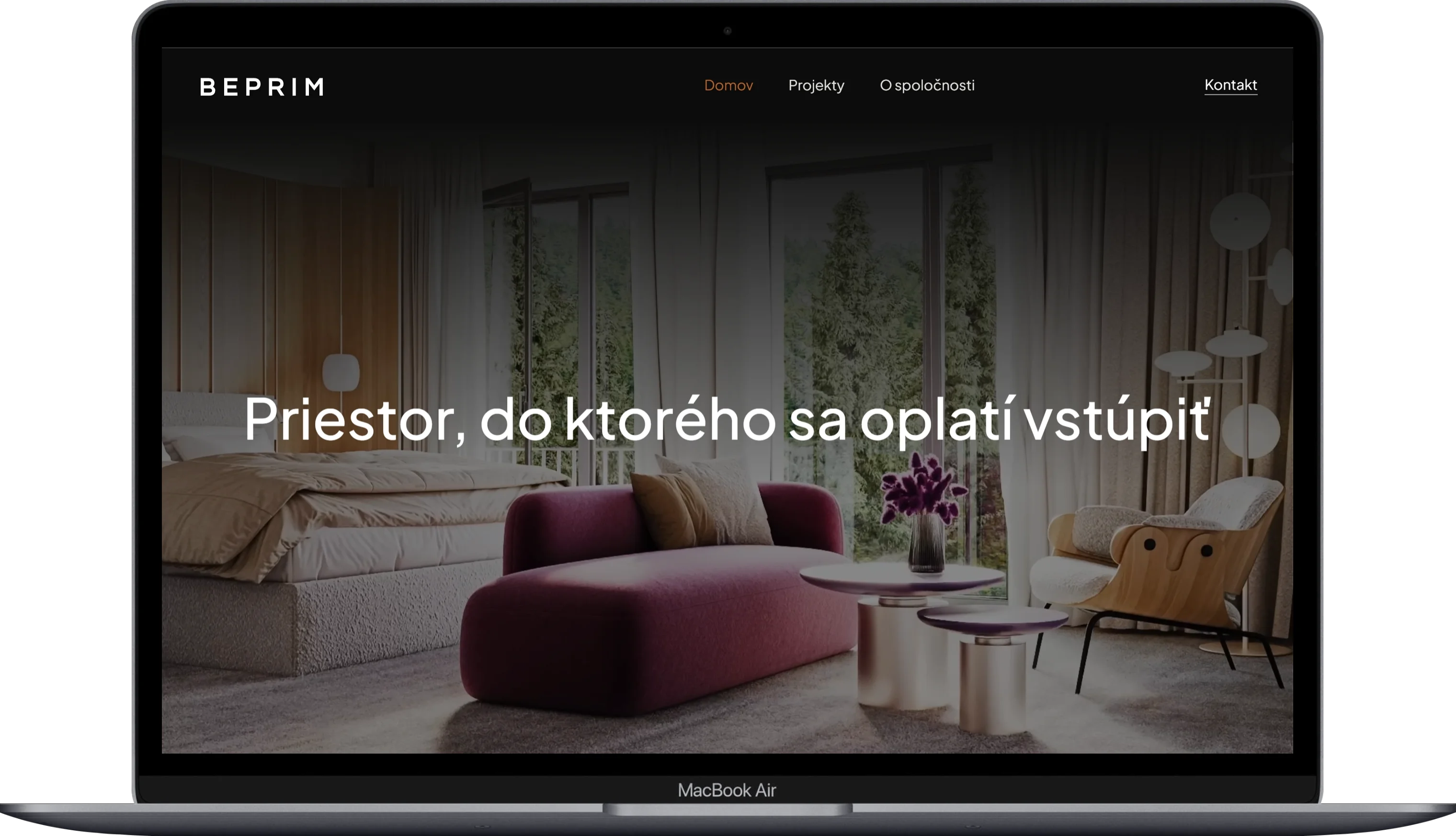
BE-PRIM
Category
Website Creation
Client
BE-PRIM
Duration
1 week
Harbor Equity
Category
Website Creation
Client
Harbor Equity a.s.
Duration
2 weeks
