

How Collaboration with a Web Agency Works: From Email to Launch

Don't know what to expect when you contact an agency? Here is the entire process described as it really looks, from the first call, through development, to delivery.
How Cooperation with a Web Agency Proceeds: From Email to Launch
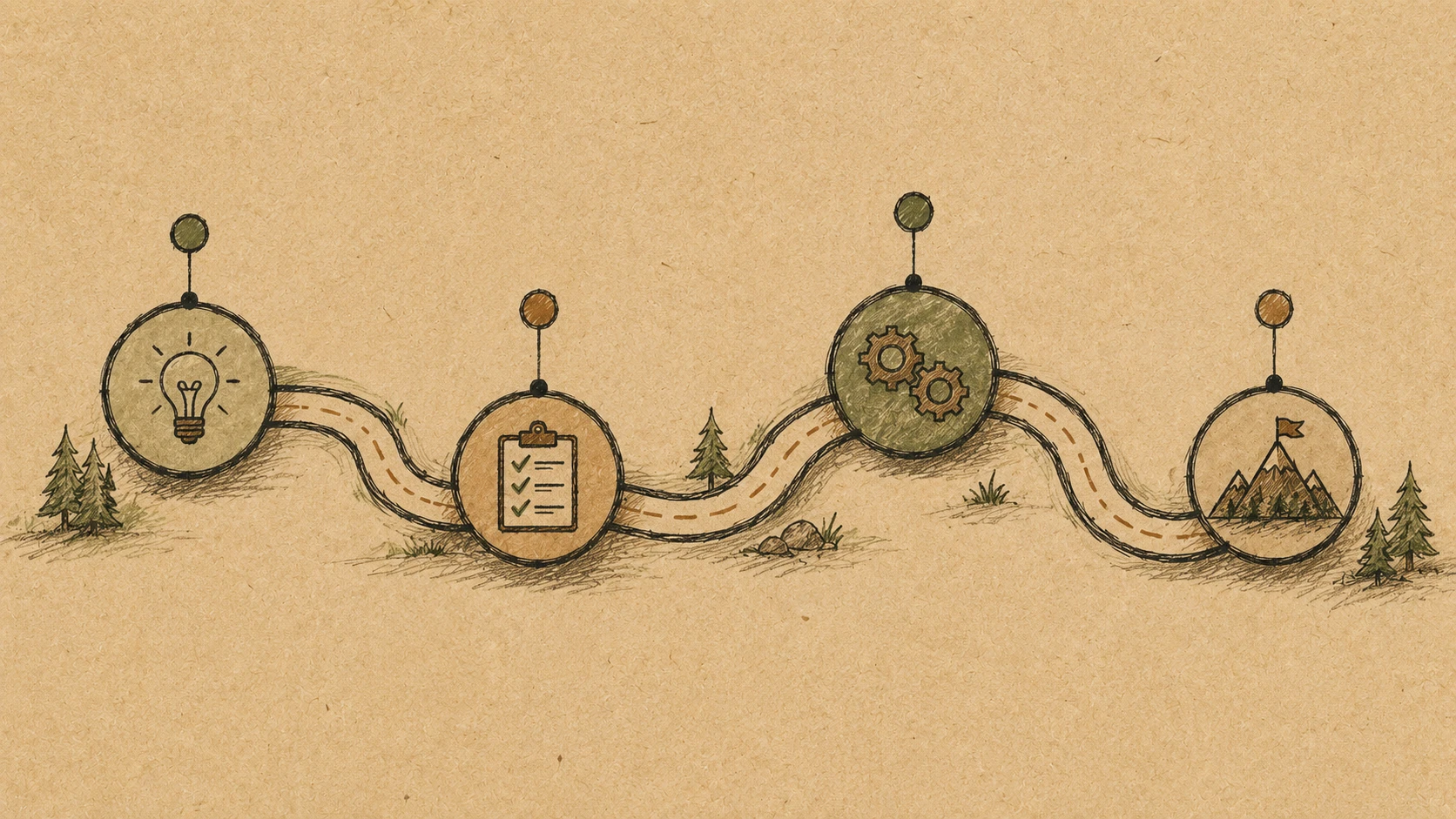
Most people who first approach an agency do not know what to expect. How does the first call go? When will they receive the contract? Who does what during development? When and how is the website delivered? And what happens afterward?
This uncertainty is normal and is one of the main reasons why projects end up differently than the client expected. Not because the agency did something wrong, but because no one said what would happen.
This article describes the entire process as it actually looks, from the first email to the launch and the first months afterward.
Why Most Projects End Up Differently Than the Client Expected
Projects rarely fail due to technical incompetence. A much more common problem is differing expectations. The client envisioned one thing, the agency did another, and no one stated it out loud at the right moment.
This happens on both sides. The client sometimes does not know exactly what they want and hopes that the agency understands it themselves. The agency sometimes assumes things that it should have clarified. The result is a project that technically works, but the client is not satisfied.
According to a report by the Project Management Institute, up to 37% of projects fail precisely due to insufficiently defined requirements at the beginning, not due to technical problems during development. Good cooperation starts with transparency from the very first contact.
Phase 1: Inquiry, Brief, and First Call
Everything begins with an inquiry, either through a web form, email, or directly by phone. A good agency will not just reply with a price. They will ask questions.
What the first call or email should contain:
- What you want to achieve (not just “I want a website,” but “I want to generate inquiries from B2B clients”)
- Who your customer is and how you are currently addressing them
- What your time horizon is and your approximate budget
- Whether you have an existing website, brand manual, texts, photos
You do not have to have all the answers. That’s exactly why there is a first call — for the agency to help you find them. But the more you can say, the more precise the offer will be.
What to watch out for: An agency that sends you a price offer without a single question treats your project in a templated way. This may not be bad if you have a simple project. But if you have specific needs, this is the first warning sign.
Phase 2: Solution Proposal, Contract, and Price
After the initial call, you will receive a proposal from the agency, either in the form of an offer or a more detailed brief that you will still approve. This phase is crucial and deserves your attention.
What a good proposal should include:
- Clear scope of work (what is included in the price and what is not)
- Timeline, when everything will be completed
- Milestones and payment plan (usually deposit, progress payment, final payment upon delivery)
- Who delivers what, texts, photos, access to systems
Contract, what to watch out for: The contract is not a formality. It contains things that can later please or annoy you:
- Ownership of code and design: After payment, the website should be 100% yours. Some agencies reserve rights to the code or templates, verify this.
- What happens if the scope is exceeded: Clients sometimes add requirements during the project. A good contract defines how such changes will be priced and approved.
- Warranties and claims: How long the agency fixes errors after the launch and under what conditions.
- Access and passwords: Who has access to the hosting, domain, administration, and what happens to it if the collaboration ends.
Phase 3: Development and Communication During the Project
This is the phase where most clients feel “in the air,” having submitted the brief, signed the contract, and are now waiting. It doesn’t have to be this way.
How communication should look during development:
- Regular updates, weekly or according to milestones
- Access to the staging (test) website where you can see progress
- A clear channel for questions and comments (email, Slack, project tool)
- Defined time for feedback from your side; projects slow down when the client does not respond for 2 weeks
Your role during development: Collaboration is not passive. The agency needs from you: timely feedback on drafts, delivery of materials (texts, photos, logos) according to the agreed schedule, and decisions, sometimes quickly. The faster you react, the smoother the project will go.
Phase 4: Testing, Handover, and Launch
Before the launch comes the testing phase. The agency goes through the website technically, checking forms, speed, mobile version, links, payments. You go through the content, texts, prices, products, contact details.
Checklist before handover - what to verify:
- Do all forms work and are notifications going to the correct email?
- Is the website functional on mobile and on different browsers?
- Are the analytics tools set up correctly - Google Analytics 4 and Google Search Console?
- Do you have access to everything, hosting, domain, administration?
- Is the SSL certificate (https) installed?
The launch is not a magical moment; it is a technical operation. The domain is redirected to the new server, and the website is live. In the first 24-48 hours, watch to see if everything is working correctly.
What Happens After Launch
This is the phase that is talked about the least while being crucial for long-term success.
After the launch, the website needs:
- Technical maintenance: platform and plugin updates, availability monitoring, backups
- SEO: a new website will not start ranking immediately. According to Ahrefs data, it typically takes 3-6 months for a site to start gaining organic traffic, and that is with regular content and technically correct foundation
- Analytics and optimization: tracking what works, what doesn't, and continuous improvement
A good agency will explain this to you even before the launch — not only when you ask why the website has no visitors a month after launch.
Common Misunderstandings Between Clients and Agencies
“The price includes texts.” Usually not. Texts are mostly on the client unless copywriting is explicitly included in the offer. Check this in advance.
“The website will be ready in a month.” A realistic timeline for a standard corporate website is 6-10 weeks, for an e-shop 8-16 weeks. It depends on the scope, availability of both sides, and the speed of approvals.
“After the launch, it will work by itself.” A website is not a one-time investment. It is a product that develops. Companies that ignore the website after the launch will find themselves redoing it again a year later.
“The agency will ensure customers for me.” The agency will provide the website. Customers will come through SEO, advertising, content, and your business. The website is a tool, not a magnet.
Conclusion
Cooperation with an agency is not complicated if you know what to expect. The key is a clear brief at the beginning, regular communication during the project, and realistic expectations from the outcome.
If you are considering a new website or e-shop and want to know what such cooperation would look like with us, we would be happy to talk. The first call is free and does not commit you to anything.