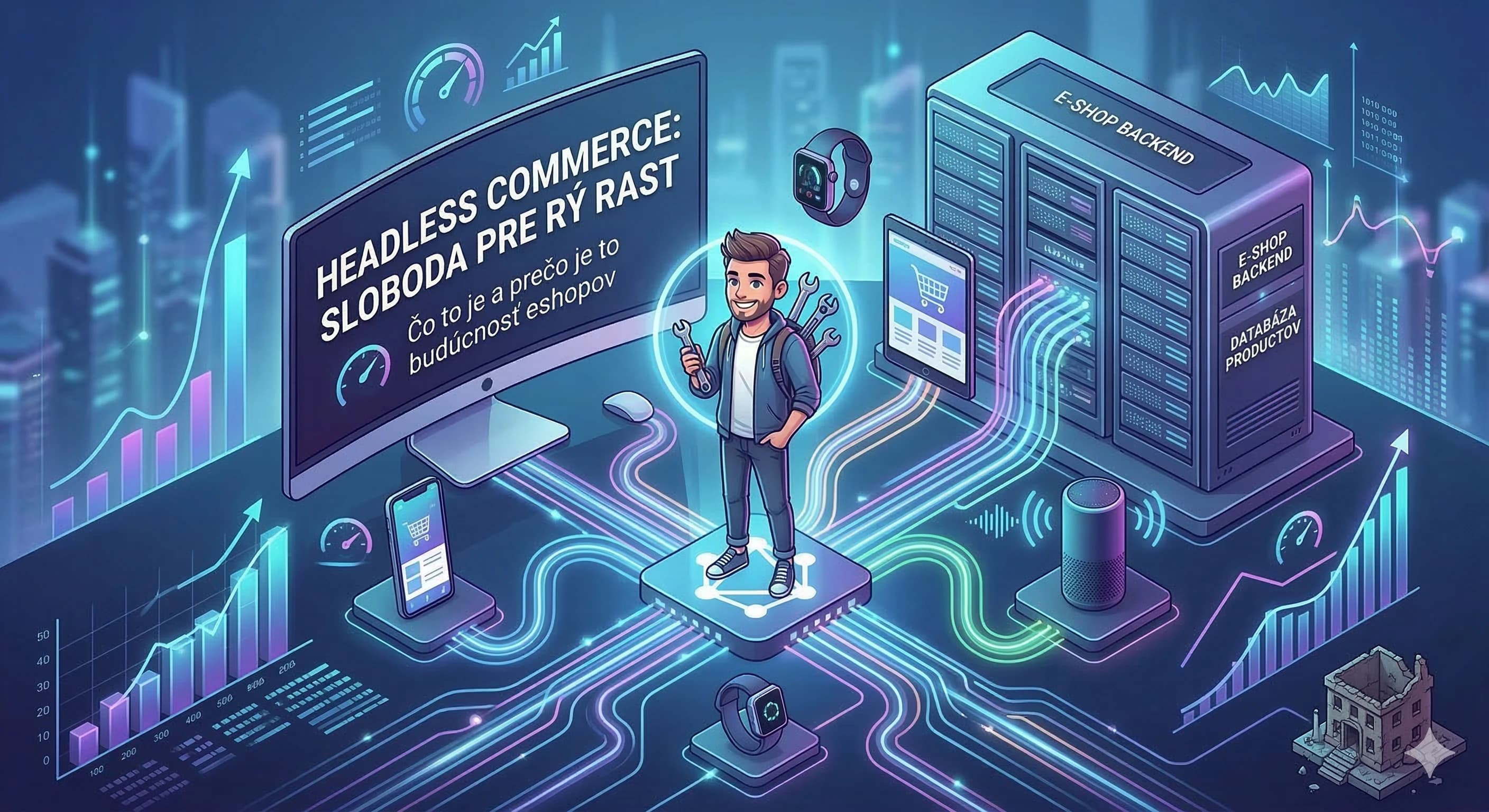
What is headless commerce and why is it the future for fast-growing online stores

Is your online store struggling to grow? Does every change on the website take weeks and the mobile experience lag behind? Headless architecture separates the frontend from the backend, giving you the freedom, speed, and scalability that you could only dream of with a traditional online store.
Headless eshop: What is headless commerce and why is it the future for rapidly growing eshops
Imagine you want to change the design of the product page in your eshop. On classic WooCommerce, this means opening the template, modifying PHP code, testing to see if the checkout is broken, and deploying the change. The entire process takes days, sometimes weeks. On a headless eshop, your developers will adjust frontend components in React, the backend is completely unaffected, and the change is live in hours.
This is the essence of headless commerce: separating what the customer sees (frontend) from what powers the store (backend). APIs communicate between them. And it is this simple architectural change that is changing the rules of the game for eshops that want to grow faster than their current platform allows.
According to the State of Headless 2024 survey, 73 % of companies are already operating websites on headless architecture, which is a 14% increase compared to 2021. Swell Among those that do not yet use headless, 98 % plan to evaluate this architecture over the next 12 months. Swell
How headless commerce works in practice
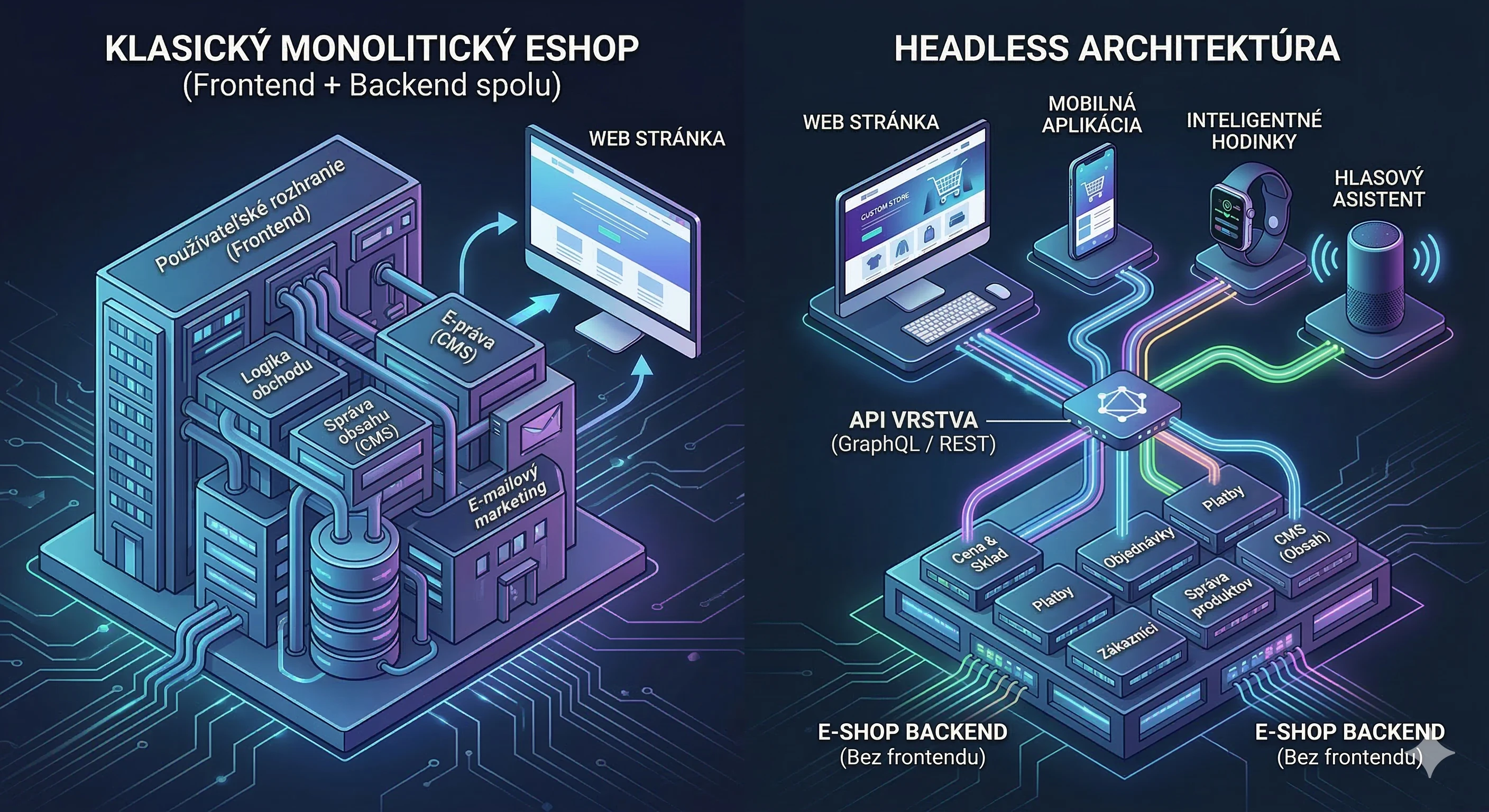
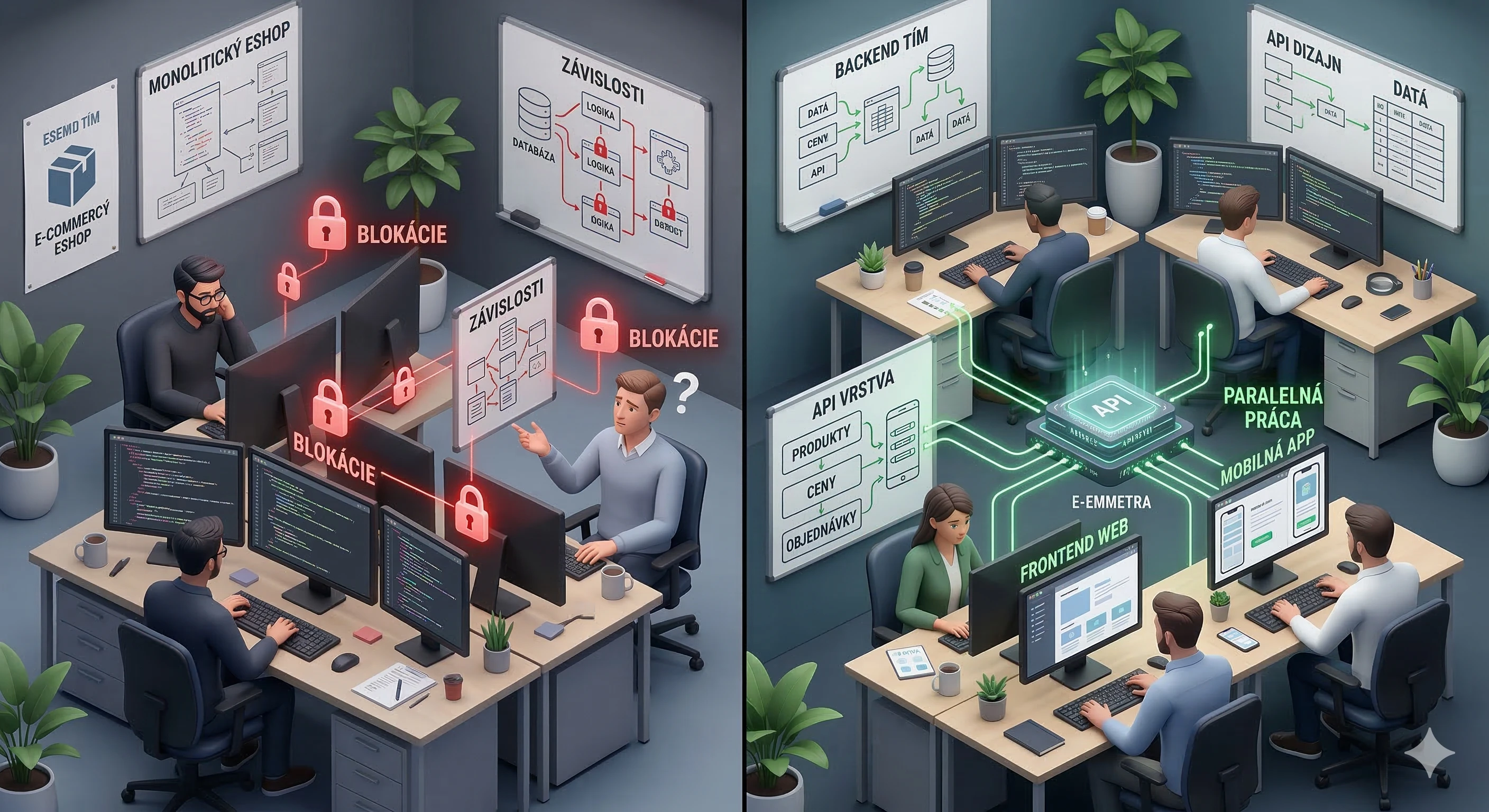
In a traditional eshop (like WooCommerce or Shopify with a theme), the frontend is tightly coupled with the backend. When a customer clicks "Add to cart", the page calls the server, which generates new HTML and sends it back. Every visual change to the website requires working with the same code that also powers orders, payments, and inventory.
Headless separates this relationship. The backend (product database, pricing, orders, payments, inventory) runs independently and provides data via APIs. The frontend (what the customer sees) is a standalone application built on modern technologies like React, Next.js, or Vue.js, which displays this data.
The result: developers can work on design and UX without the risk of breaking business logic. The marketing team can change content without waiting for programmers. And the same backend can power data for not only the web but also a mobile application, a kiosk in store, or a voice assistant.
Advantage #1: Speed that translates into revenue
Page load speed is not just a technical parameter. It is a directly measurable conversion factor.
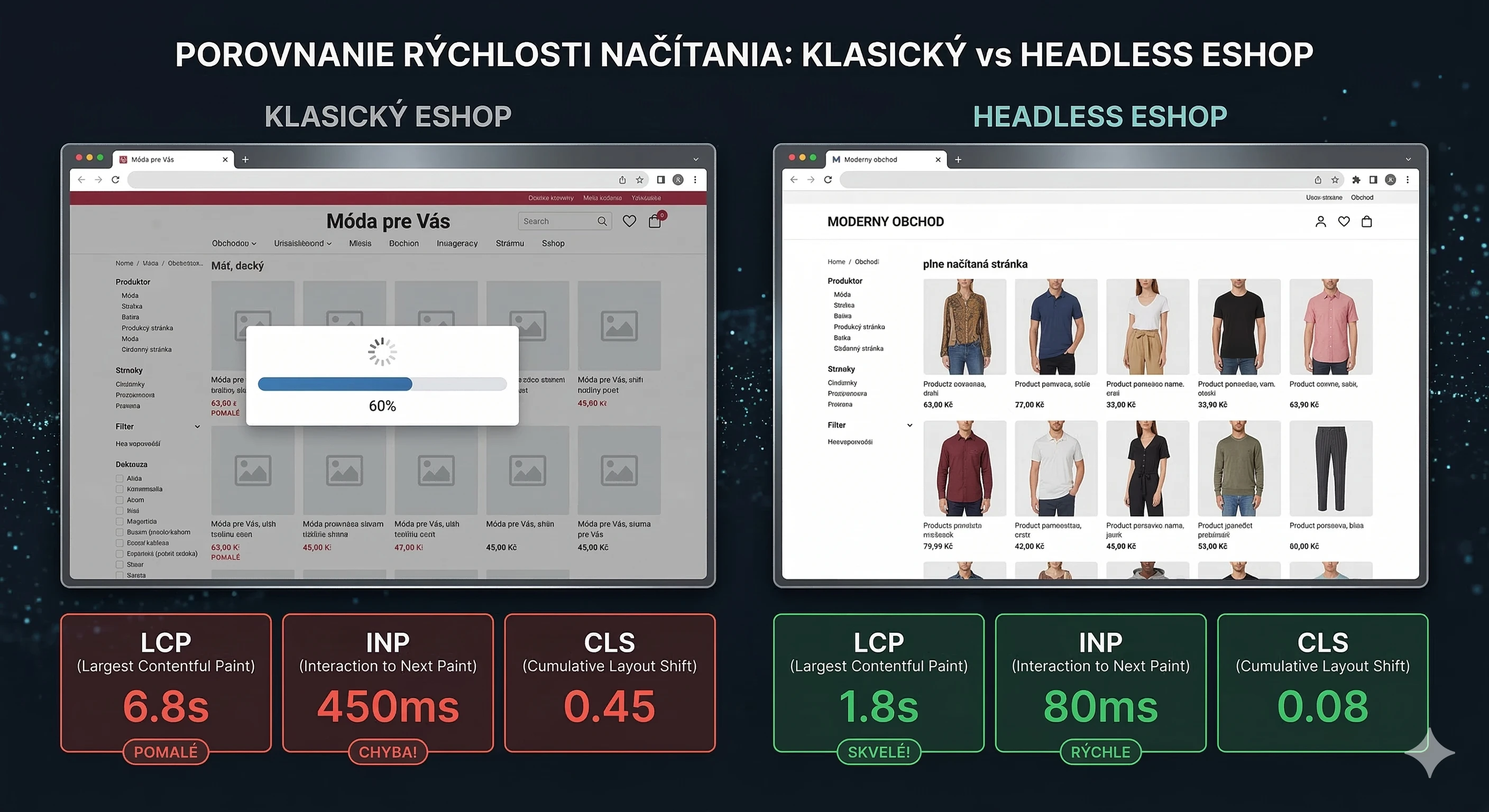
Every one-second improvement in load speed increases conversions by 2%. Swell On headless architecture, where the frontend operates as a statically generated or server-side rendered application, pages load significantly faster than on traditional platforms.
Companies that have implemented headless commerce report an average 20% decrease in website load times. Alokai French fashion brand Kaporal after migrating to headless achieved a 15% increase in desktop conversions, 8% on mobile, and 60% reduction in bounce rate. Swell These are not marginal improvements. For an eshop with an annual turnover of 500,000 euros, a 15% increase in conversions can mean tens of thousands of euros more.
Advantage #2: Total freedom in design
On a classic platform, you are limited by what the template allows. Want a customized product configurator? An animated shopping guide? An interactive comparison chart? On WooCommerce with Elementor, this requires workarounds, plugins, and compromises.
On headless architecture, the frontend has no limitations because it is not dependent on the backend template system. Headless allows total creative freedom when building custom designed layouts and dynamic content without being constrained by template limits. Arcticleaf
In all sectors studied by Statista, the ability to tailor digital experiences was identified as the greatest advantage of headless commerce. Crystallize
Advantage #3: Scalability without pain
Black Friday, seasonal sales, viral campaigns on social media. If your classic eshop crashes under increased traffic, you not only lose orders but also customer trust.
Among companies using headless architecture, 79% rate their ability to scale as good or excellent, compared to only 62% for companies on traditional platforms. Swell This 17-point difference grows with increasing traffic.
The brand Ruggable maintained 100% uptime on the headless platform during Black Friday while expanding to 8 markets. Swell This is the type of reliability that a traditional monolithic eshop simply cannot guarantee under peak loads.
Advantage #4: Faster development and deployment of changes
The time needed to bring new features to market is critical in ecommerce. If the competition launches a new feature in a week and it takes you two months, customers will feel it.
Organizations on headless architecture report 75% faster creation of new pages, 90% faster publication of content, and 50% increase in development team productivity. Swell These accelerations are not one-time. They cumulative with each iteration and over time represent a huge complex advantage.
80 % of organizations using headless architecture report that they feel ahead of the competition in deploying new digital experiences. Swell
When headless is not the right choice
Headless is not a one-size-fits-all solution. For a small eshop with 50 products and an annual turnover of 30,000 euros, a classic WooCommerce or Shopify is still the better choice. The investment in headless architecture starts to pay off from a certain level of complexity and growth.
Headless requires a more experienced development team. Instead of one platform, you manage at least two layers (frontend and backend), which increases demands on DevOps and maintenance. Initial costs are higher because it is not about installing a theme, but about developing an application.
Headless makes sense when your eshop is actively growing and the current platform is holding it back. When you need a specific design or features that templates cannot cover. When you plan to sell through multiple channels (web, app, marketplace). And when the speed of deploying changes is a competitive advantage for you.
Headless and WordPress: Can it be combined?
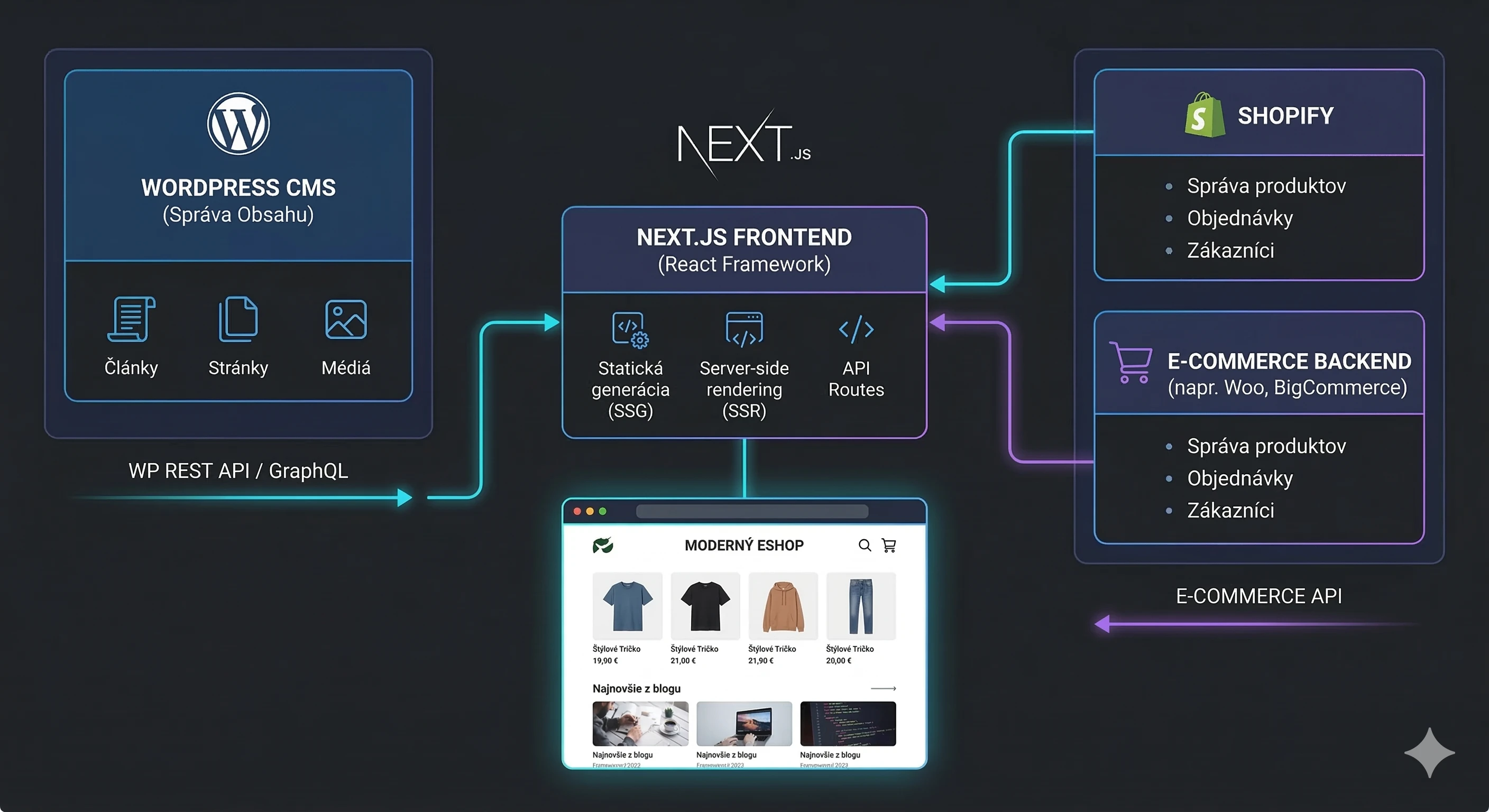
Yes. WordPress can serve as a backend CMS in headless architecture that provides content via REST API or GraphQL (via the WPGraphQL plugin). The frontend then runs as a standalone application like Next.js.
This approach is interesting for companies that have an existing WordPress website with a large amount of content and do not want to migrate the database. The marketing team continues to manage content through the familiar WordPress interface, while customers receive a blazing fast frontend.
For a full-featured ecommerce backend, headless WordPress can be combined with solutions like Shopify (via Storefront API), Medusa.js (open source), or Saleor, which ensure business logic, payments, and order management.
What does migration to headless look like
Transitioning from a classic eshop to headless is not a weekend project. It is a strategic project that requires planning.
There are three main migration strategies:
- progressive (in phases),
- hybrid (modernizing the frontend while keeping the backend)
- big-bang (complete platform change).
Each has its advantages and risks. Digital Applied
For most Slovak eshops, we recommend a hybrid approach: retain the existing backend (WooCommerce, Shopify) and gradually deploy a new headless frontend. This minimizes risk, maintains functionality during the migration, and allows you to measure results after each phase.
The entire process involves an audit of the current architecture, selecting technologies, designing the API layer, developing the frontend, performance testing, and gradual deployment. An agency with experience in both worlds (WordPress/WooCommerce and modern frameworks) can handle this transition without downtime and without losing SEO.
Conclusion: Headless is not a trend, it is an evolution
The market for headless commerce will grow from 1.74 billion dollars in 2025 to 7.16 billion by 2032, representing a 22.4% annual growth. Swell It is not an experimental technology. It is the new standard for eshops that want to be fast, flexible, and future-ready.
If your eshop is growing and you feel that your current platform is holding it back, headless is the path worth exploring. Not because it is a buzzword, but because it will give you the freedom to build exactly the experience your customers expect.


Selected projects
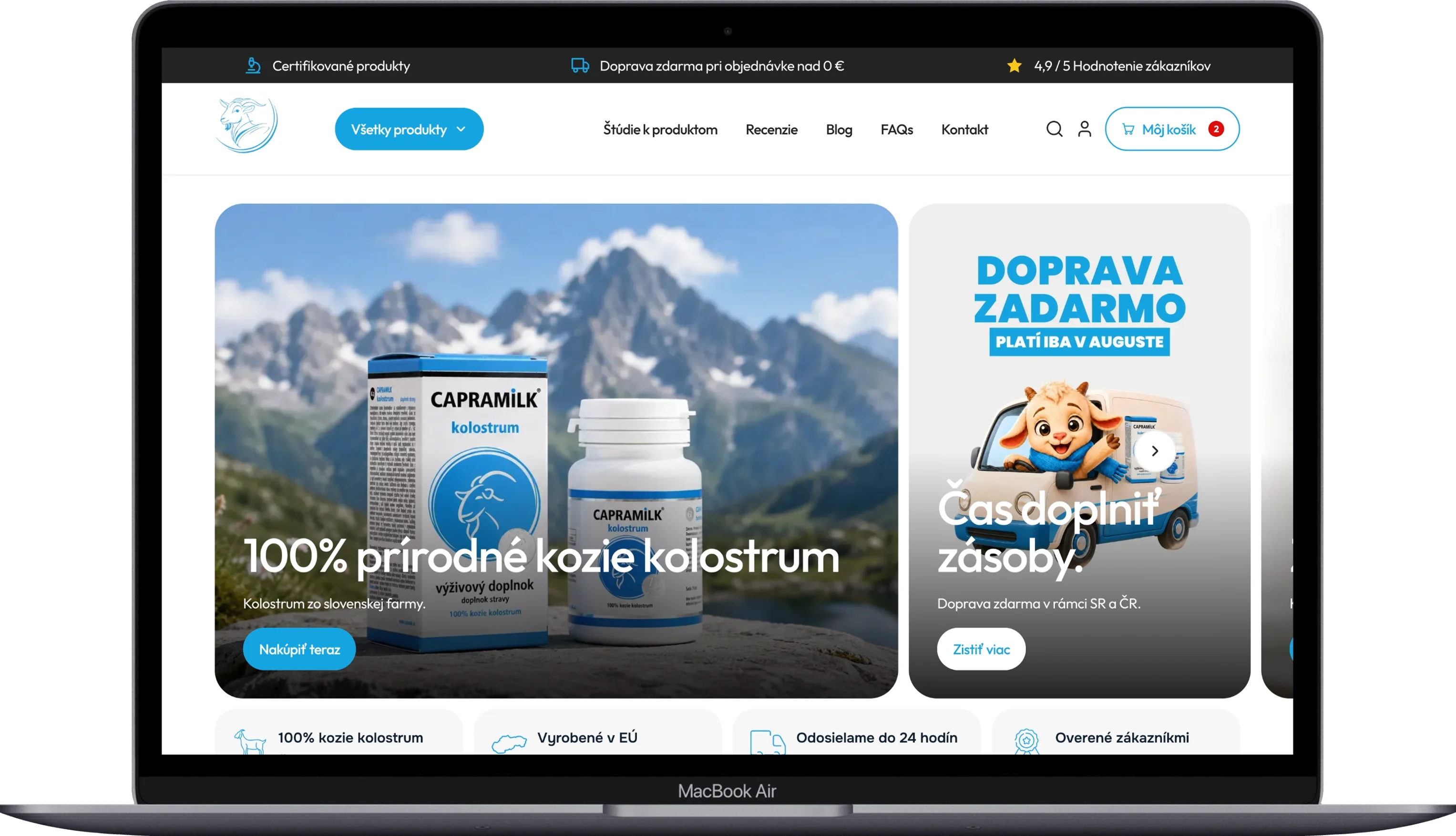
CapraKolostrum
Category
Custom Development
Client
CapraKolostrum
Duration
6 weeks
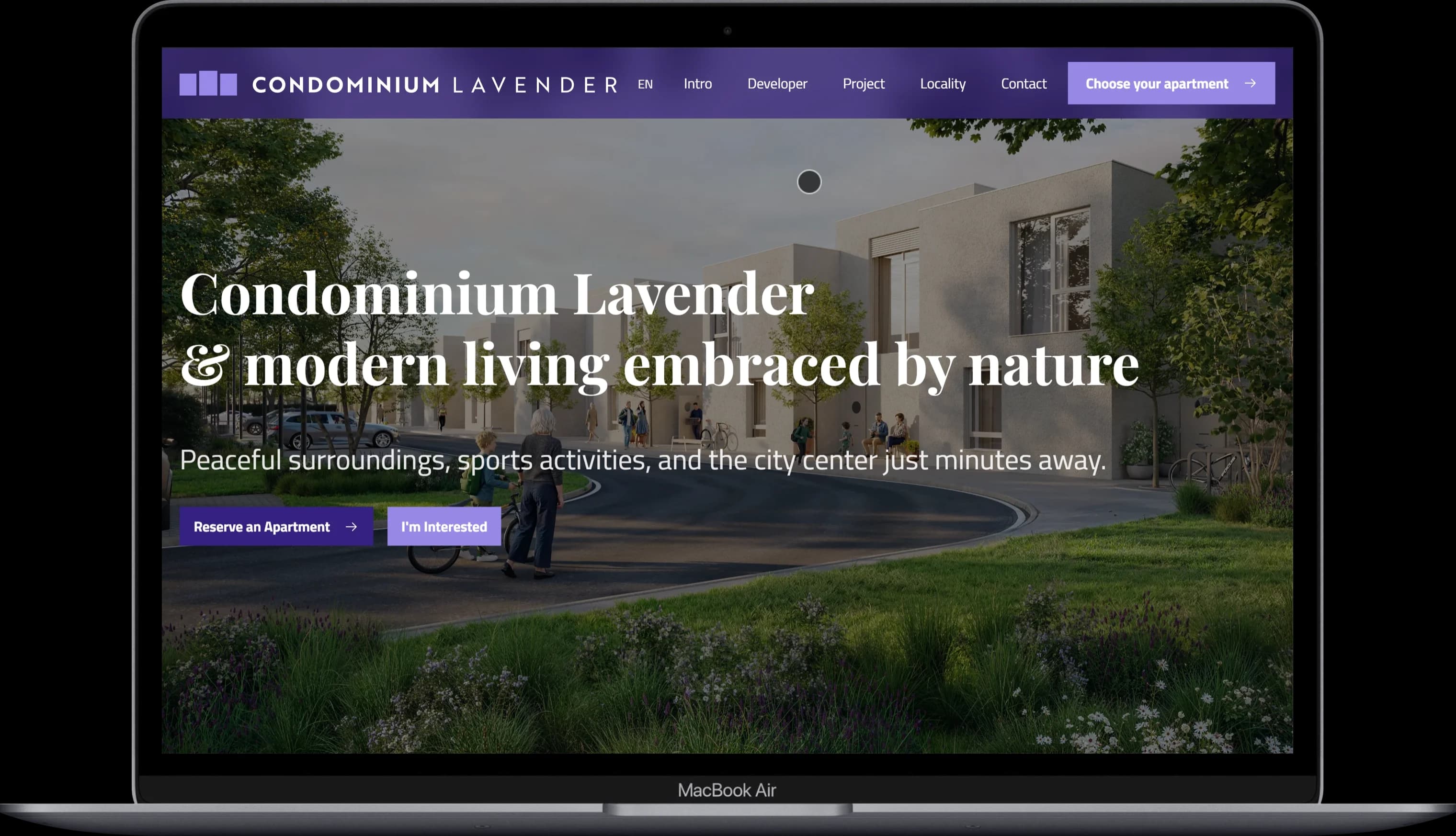
Condominium Lavender
Category
Custom Development
Client
Proxin s.r.o.
Duration
3 weeks
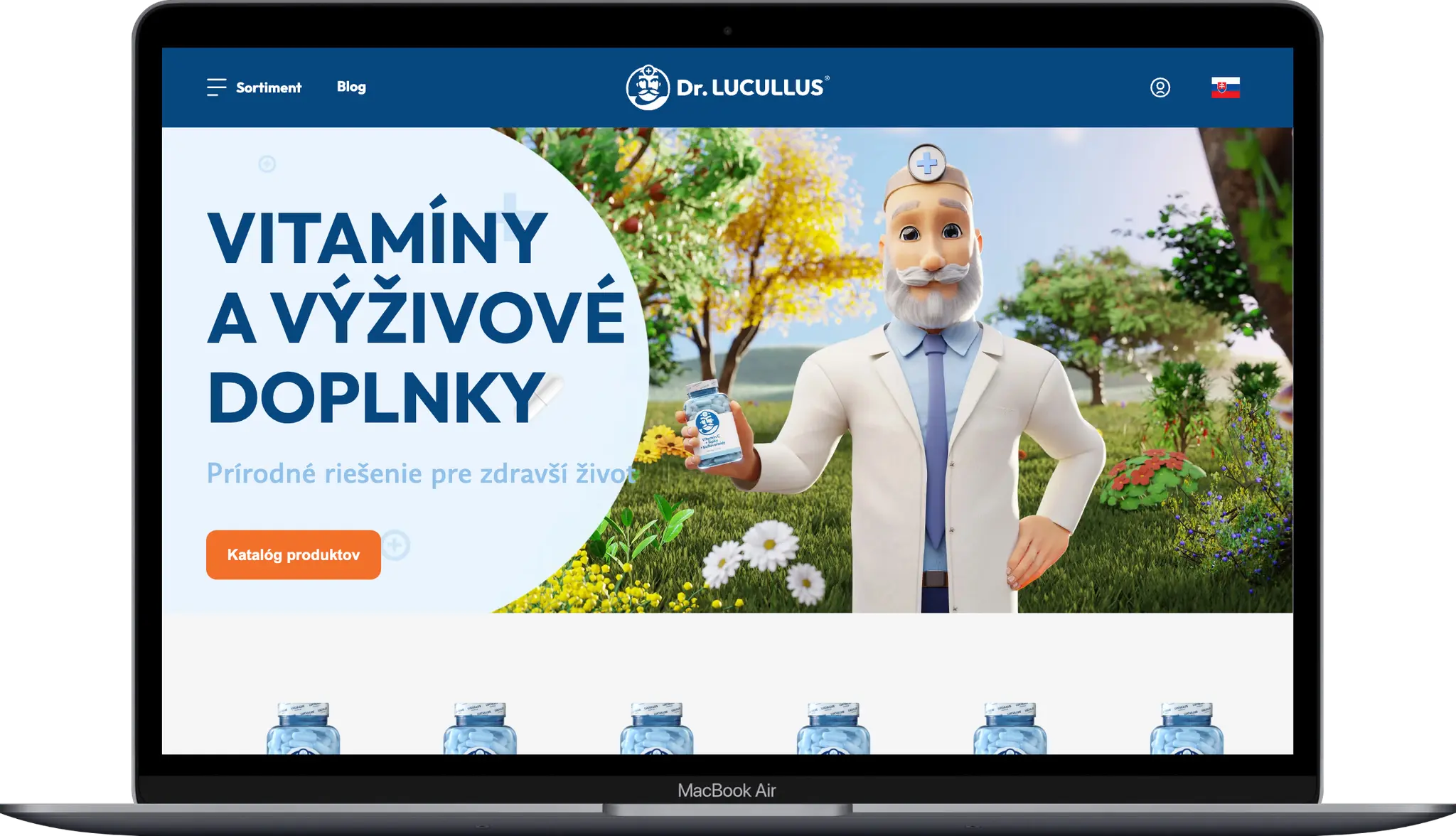
Dr. LUCULLUS
Category
Custom Development
Client
Dr. Lucullus MEDICAL
Duration
March 1, 2025 - present
Novanta Prievoz
Category
Custom Development
Client
Proxin s.r.o.
Duration
3 weeks