
Shopify vs WooCommerce: Complete Comparison for the Slovak Market in 2026

A comparison of Shopify and WooCommerce from the perspective of a Slovak entrepreneur. Prices, features, SEO, payment gateways, shipping, and real project experiences. Find out what is worth it for you.
If you are deciding on which platform to build an eshop, you have probably narrowed it down to two names. Shopify and WooCommerce. Both platforms power millions of stores around the world and both have strong sides. The problem is that most comparisons on the internet are written from the perspective of the American or British market. However, a Slovak entrepreneur deals with completely different things. Payment gateways that work with our banks. Delivery services like Packeta or GLS. Connection to accounting software POHODA. Heureka feed. Cash on delivery.
In this article, we will compare Shopify and WooCommerce from a perspective that will genuinely help you as a Slovak entrepreneur make a decision. Without marketing phrases, with concrete numbers and experiences from projects we have built on both platforms.
What is Shopify and what is WooCommerce
Before we dive into the comparison, it is good to understand the fundamental difference in what these platforms actually are.
Shopify is a rental platform. You pay a monthly fee and get a complete solution. Hosting, security, updates, admin panel, payment processing. Everything runs on Shopify's servers and you don’t have to worry about the technical infrastructure. It's like renting an office in an administrative building, where the landlord takes care of heating, cleaning, and internet.
WooCommerce is a free plugin for WordPress. You install it on your own hosting, configure it, add other plugins as needed, and you have an eshop. You have complete control over everything, but at the same time, everything is your responsibility. It's like buying your own house. You do what you want, but when the roof leaks, you call the roofer yourself.
This difference is crucial and affects practically every aspect we will discuss below.
How much it costs: Real costs, not just the monthly fee
The price is usually the first thing you look at. And here most comparisons make mistakes by comparing only the monthly fee of Shopify with "WooCommerce is free". The reality is more complicated.
Shopify: What you actually pay
Shopify offers three main plans. Basic for about 24 EUR per month with annual payment, the mid Shopify plan for about 69 EUR per month, and Advanced for about 299 EUR per month. For most Slovak eshops with up to 1000 orders per month, Basic or mid plan is sufficient.
However, add paid applications from the Shopify App Store to the monthly fee. A typical Slovak eshop needs an application for generating feeds for Heureka (10 to 30 EUR/month), or possibly an application for advanced filtering or reviews. The real monthly operating costs for a Shopify eshop in Slovakia range from 40 to 120 EUR monthly, plus transaction fees for payments.
However, you will get zero worries about hosting, security, and updates. And that has its value.
WooCommerce: "Free" plugin, paid infrastructure
WooCommerce itself is free. But to run an eshop, you need hosting (from 5 to 50 EUR per month depending on quality), an SSL certificate (usually part of hosting), a domain (10 to 15 EUR per year), a template (one-off 50 to 80 EUR if you want a ready-made one), and plugins. And you need more plugins than you would expect.
WooCommerce by itself doesn’t know much. For payment gateways, shipping methods, invoicing, SEO, security, backups, and other functionalities, you need plugins. Some are free, others are paid. The real monthly operating costs for a WooCommerce eshop range from 20 to 80 EUR per month, but add time or money for maintenance, updates, and resolving compatibility among plugins.
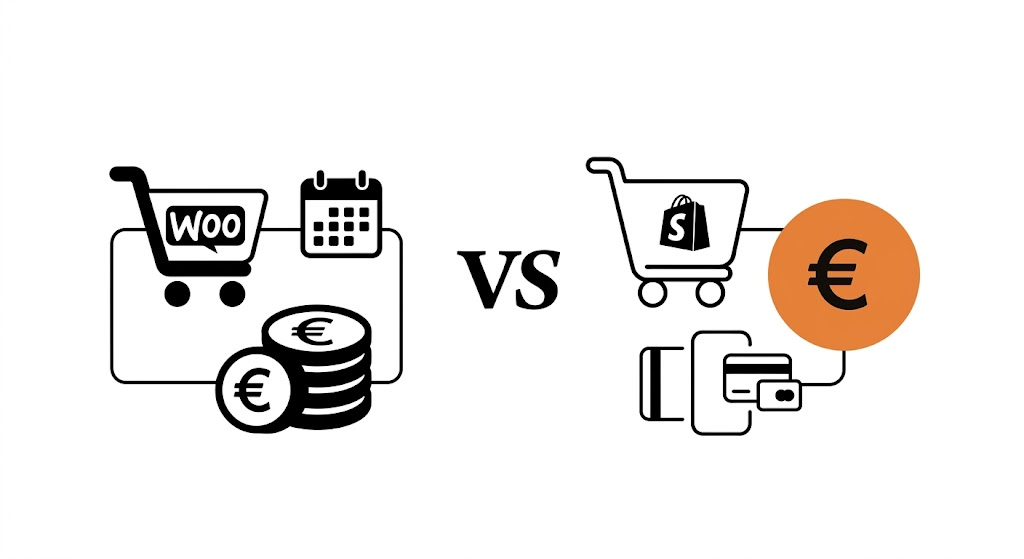
The real price difference
If you compare pure operating costs, WooCommerce comes out cheaper. But if you add the time spent on maintenance, updates, and resolving technical issues (or money for a developer who does it for you), the difference shrinks significantly. For eshops with higher turnover, where reliability and minimal downtime are needed, Shopify might be overall more advantageous.
Ease of use vs. flexibility
This is an area where both platforms fundamentally differ and where most entrepreneurs will make a decision.
Shopify: You can launch an eshop over the weekend
Shopify is designed for you to manage it without technical knowledge. Registration, choosing a template, adding products, setting up payments, and shipping. If you have prepared photos and texts, you can have a functional eshop in just a few days. The admin panel is clear and intuitive. You don’t need to understand databases, hosting, or code.
This is also Shopify's greatest strength and greatest limitation. What the platform offers works perfectly. What it doesn’t offer, you either resolve through an app from the App Store, or you have it custom programmed in Shopify Liquid (but that requires a developer).
WooCommerce: Endless possibilities, higher technical demands
WooCommerce gives you complete control. You can change literally anything. The checkout process, product structure, admin panel, automations, integration with external systems. If you can describe it, you can build it.
But with that freedom comes responsibility. WooCommerce requires regular updates for WordPress, WooCommerce itself, and all plugins. And those updates may not always get along. After updating one plugin, another may stop working. This is not a theoretical problem. We see it regularly with client projects.
For the non-technical entrepreneur, this means that sooner or later, you will need a developer or an agency to take care of the technical side of WooCommerce.
Slovak specifics: payment gateways, shipping, and accounting
Here we get to a topic missing in global comparisons, but it is essential for a Slovak eshop.
Payment gateways
WooCommerce has a long-term advantage in this. GoPay, Besteron, ComGate, TatraPay, and other Slovak payment gateways have ready-made plugins for WooCommerce that just need to be installed and configured.
Shopify has significantly changed this gap in recent years. Shopify Payments (powered by Stripe) works in Slovakia and supports Slovak bank cards. There are native solutions for cash on delivery and bank transfer. ComGate has an official Shopify application. It is no longer "Shopify does not support Slovakia" as it used to be a few years ago.
Shipping and courier services
WooCommerce has plugins for Packeta, DPD, GLS, and other Slovak shipping services. Shopify does as well, but options are narrower and some integrations require paid apps. If you sell oversized goods or have more complex shipping rules (different prices by zones, weight, dimensions), WooCommerce is more flexible.
Accounting and invoicing
Connecting to POHODA, Money S3, or SuperFaktúra is simpler through WooCommerce, where there are direct plugins. On Shopify, it works through third-party applications or APIs. It’s not impossible, but it requires more setup.
Heureka and comparison sites
Generating XML feeds for Heureka, Najnákup, and other comparison sites is easy on WooCommerce through free plugins. On Shopify, you need a paid application, like ShoppingFeeder or similar solutions. It works, but it is another monthly cost.
SEO: Where you will perform better on Google
Both platforms allow for quality SEO. But the approach differs.
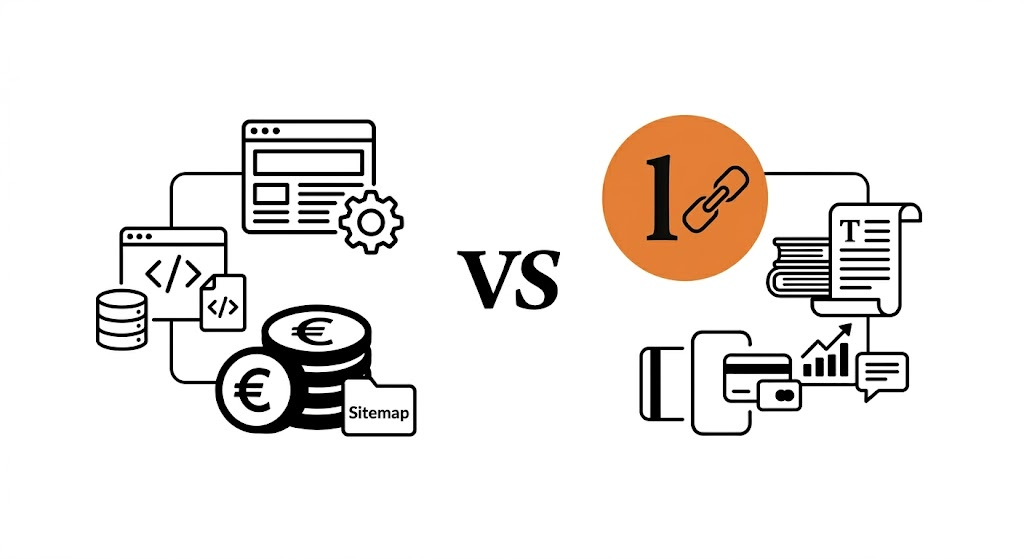
WooCommerce runs on WordPress, which is a platform where SEO has always been one of its strongest sides. With plugins like Yoast SEO or Rank Math, you have complete control over meta tags, URL structure, schema markup, sitemap, and other technical aspects. If you add quality content to your blog, WordPress is hard to beat from an SEO perspective.
Shopify handles basic SEO well. Clean URLs, meta tags, sitemaps, canonical URLs. But it has some historical limitations. The URL structure includes mandatory prefixes (/collections/, /products/), which reduces flexibility. The blog on Shopify functions, but it is nowhere near as powerful as a WordPress blog. Shopify also does not support some advanced SEO techniques without modifications in the template code.
If organic traffic from Google is a key channel for your business and you plan to invest significantly in content strategy, WooCommerce has the advantage.
Scalability and performance
Shopify: performance without worries
Shopify runs on its own CDN infrastructure. Pages load quickly, the server can handle even sudden surges in orders (for example during Black Friday), and you don’t have to worry about server optimization. This is one of Shopify's strongest sides. It simply works and doesn’t crash.
WooCommerce: it depends on hosting and setup
The performance of a WooCommerce eshop varies dramatically based on the quality of hosting, the number of plugins, and optimization. On cheap shared hosting with 30 plugins, the eshop will be slow. On quality VPS with optimized settings, it can be lightning fast. But that optimization requires knowledge or someone who knows what they are doing.
As the number of products grows into the thousands and daily traffic increases, WooCommerce requires increasingly powerful (and more expensive) hosting. Shopify does not face this issue because its infrastructure scales automatically.
International sales
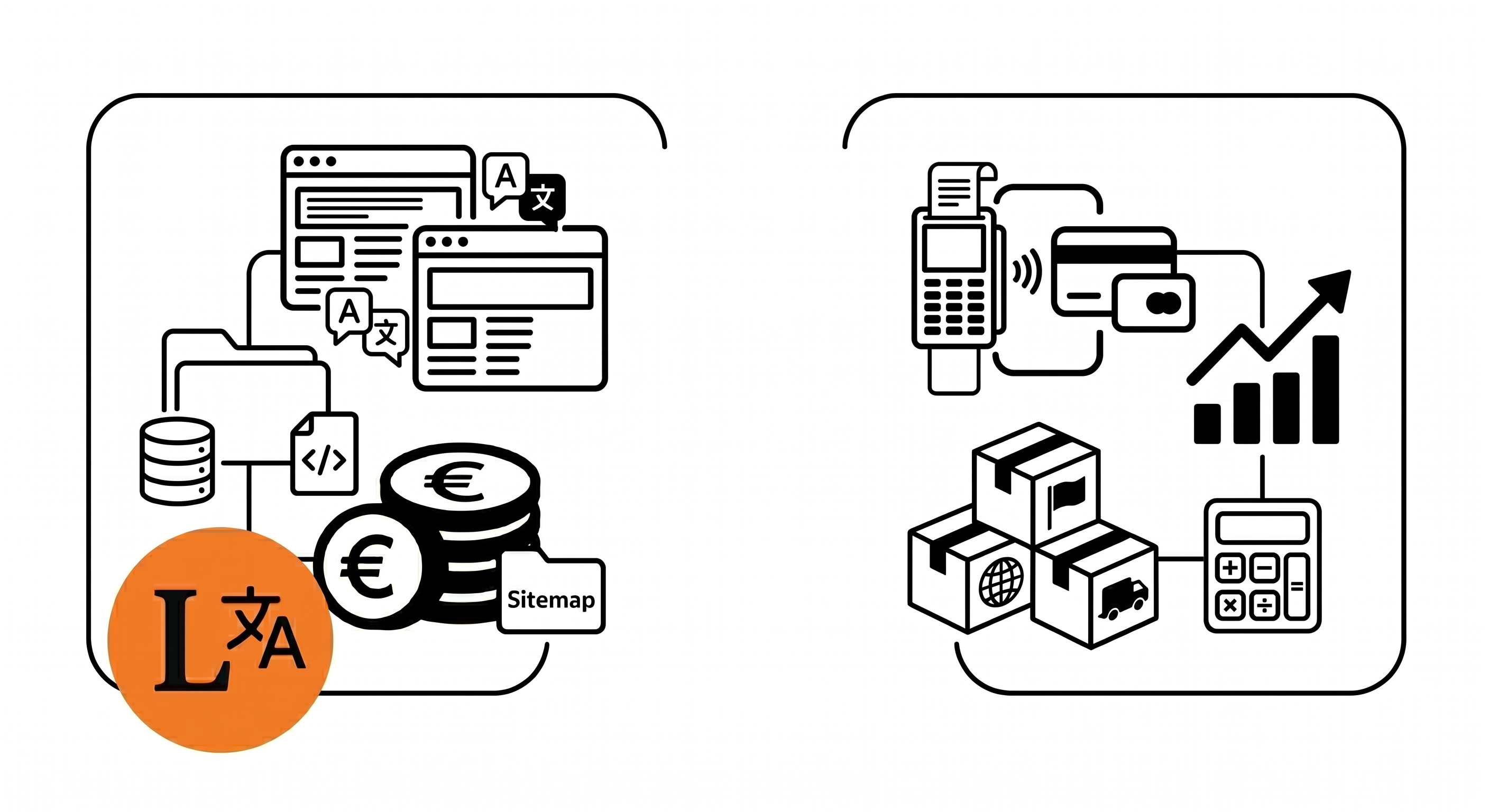
If you plan to sell to multiple countries, Shopify has a distinct advantage thanks to the Shopify Markets feature. From one admin panel, you can manage multilingual versions of the eshop, local currencies, taxes, and domain variants. It’s one of the main reasons brands expanding abroad choose Shopify.
On WooCommerce, you handle international sales through plugins like WPML for multilingual support and other plugins for multi-currency. It works, but management is more complicated, and the risk of conflicts between plugins is higher.
Security
Shopify takes care of security for you. PCI DSS compliance, SSL certificates, automatic backups, DDoS attack protection. You don’t have to deal with anything.
WooCommerce security depends on you. WordPress is the most used CMS in the world, making it also the most common target for attacks. Regular updates, security plugins, strong passwords, and quality hosting are essential. Neglecting updates can lead to the eshop being compromised. Unfortunately, we see this with clients who come to us with compromised WooCommerce eshops.
Who is Shopify for and who is WooCommerce for
After years of working with both platforms, we have created a fairly clear picture of when we recommend which platform.
We recommend Shopify when:
You want to focus on sales, not technology. You don’t want to deal with hosting, updates, and security. You plan to sell to multiple countries. You have a simpler product catalog (clothing, cosmetics, accessories, food). You need reliability and minimal downtime. You want to launch your eshop quickly and iterate on the go.
We recommend WooCommerce when:
You have complex functionality requirements that Shopify does not offer by default. You need deep integration with Slovak systems (POHODA, specific payment gateways). SEO and content marketing is your primary acquisition strategy. You have a developer or agency that will take care of the technical side. You need maximum control over every aspect of the eshop. Your budget for starting is very limited.
Migration between platforms
If you already have an eshop on one platform and are considering moving to another, it is feasible but not trivial. Migration involves moving products, customer data, order history, setting up 301 redirects (so you don’t lose SEO rankings), and reconfiguring payment gateways and shipping.
We have done migrations both ways. From WooCommerce to Shopify and vice versa. Typically, it takes 4 to 8 weeks depending on the number of products and the complexity of the original solution. If you are interested in the topic, we have written a separate article about migration from WooCommerce to Shopify.
Conclusion: It's not about the platform, it's about your business
Neither Shopify nor WooCommerce is objectively better. They are better for a specific type of business and specific needs. The most important thing is to ask yourself the right questions. How much time do you want to spend on the technical side? What is your budget for operation? Are you planning international expansion? What is your acquisition strategy?
If you are still unsure, reach out to us. We work with both platforms and would be happy to advise you on what makes sense for your specific case. No sales speeches, just a rational assessment based on your real needs.




Selected projects
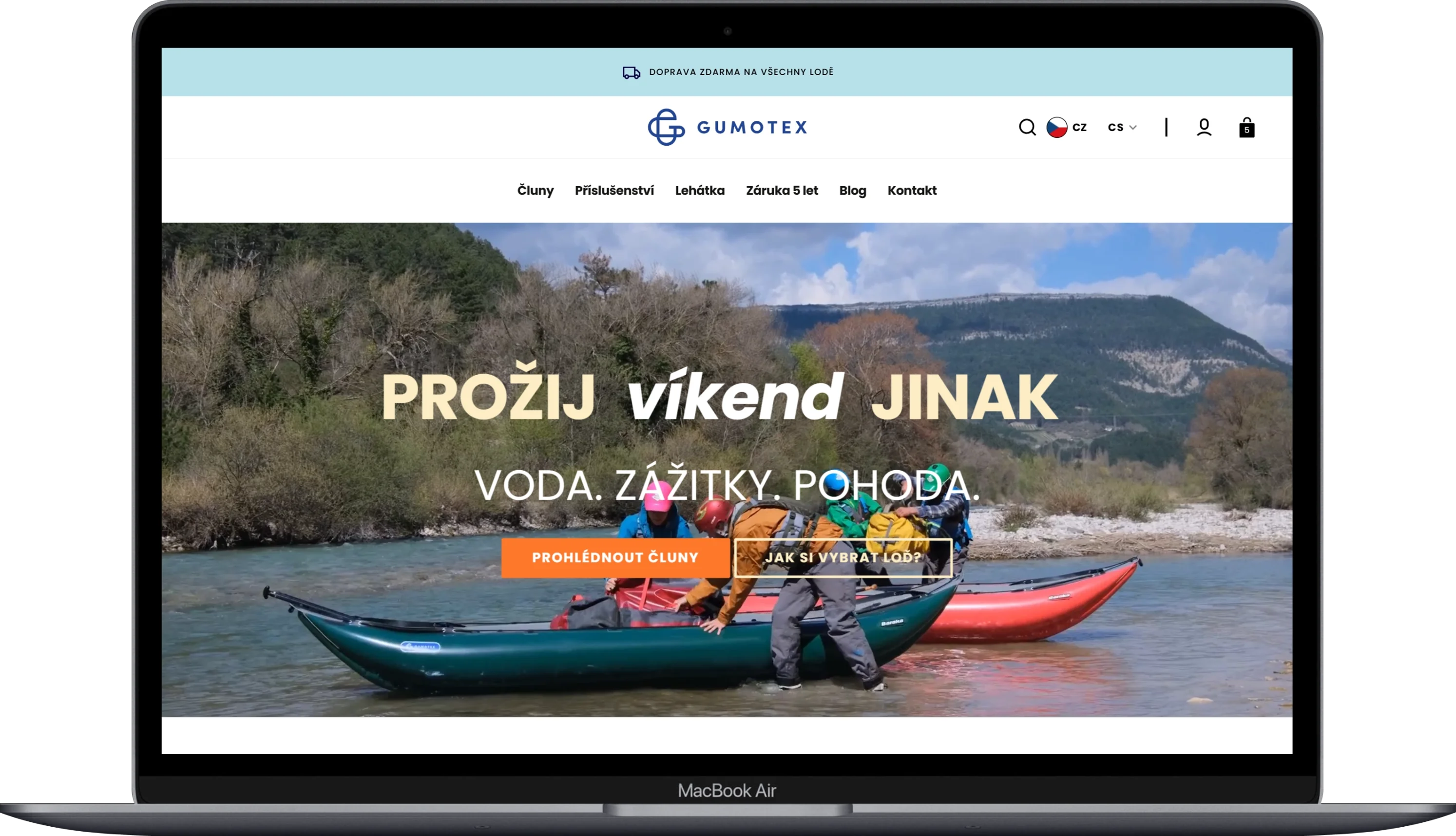
Gumotex
Category
E-commerce
Client
GUMOTEX Coating s.r.o.
Duration
4 months
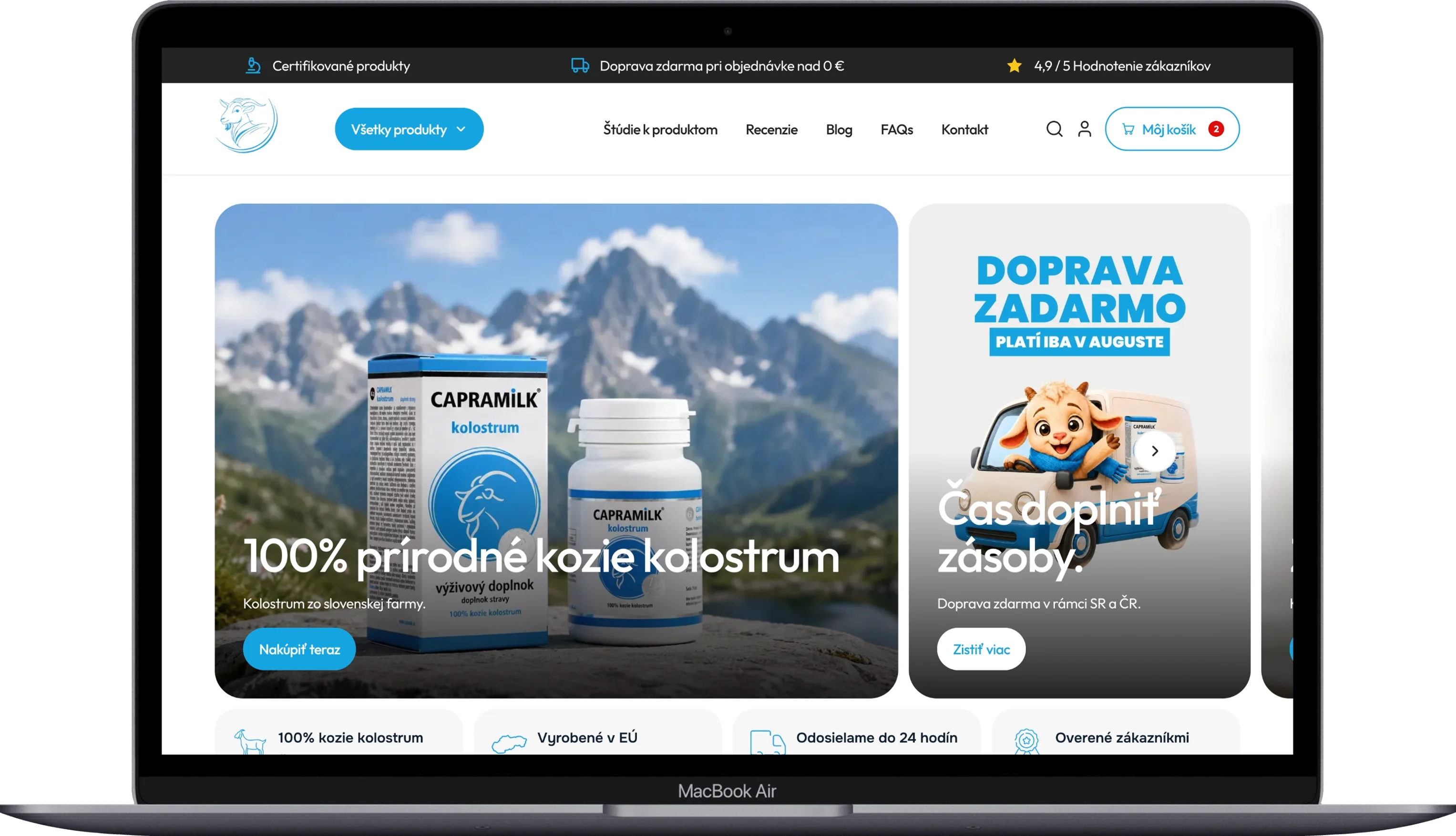
CapraKolostrum
Category
Custom Development
Client
CapraKolostrum
Duration
6 weeks
Petmiska
Category
E-commerce
Client
Next Point Company s. r. o.
Duration
2 months

Dr. LUCULLUS
Category
Custom Development
Client
Dr. Lucullus MEDICAL
Duration
March 1, 2025 - present