Customer Portal vs. B2B Eshop: Where is the Line and When Do You Need Both

A B2B eshop and a customer portal are not the same - even if they look similar. Find out what the real difference is between them, when one solution is enough, and when you lose customers and efficiency without a combination of both.
Customer Portal vs. B2B Eshop: where is the boundary and when do you need both
In B2B digitalization, there is one very common misconception. A company decides that it wants to sell online, launches a B2B eshop, and after a while realizes that existing customers rarely use it. Orders still come in via email. Salespeople still respond to inquiries about delivery status. Invoices are still sent manually. The eshop is functional, but customers do not return to it.
The problem is usually not in the quality of the eshop. The problem is that the company built an acquisition tool where customers need a tool for everyday management of their relationship with the supplier. These are two different needs and they are addressed by two different types of systems.
According to Gartner, today 67% of B2B buyers prefer a buying experience without a sales representative. Not because they are not interested in a relationship with the supplier, but because for routine transactions and account management they want digital tools that save them time. The question is, what digital tool will you provide them.
What is a B2B eshop and what does it really solve
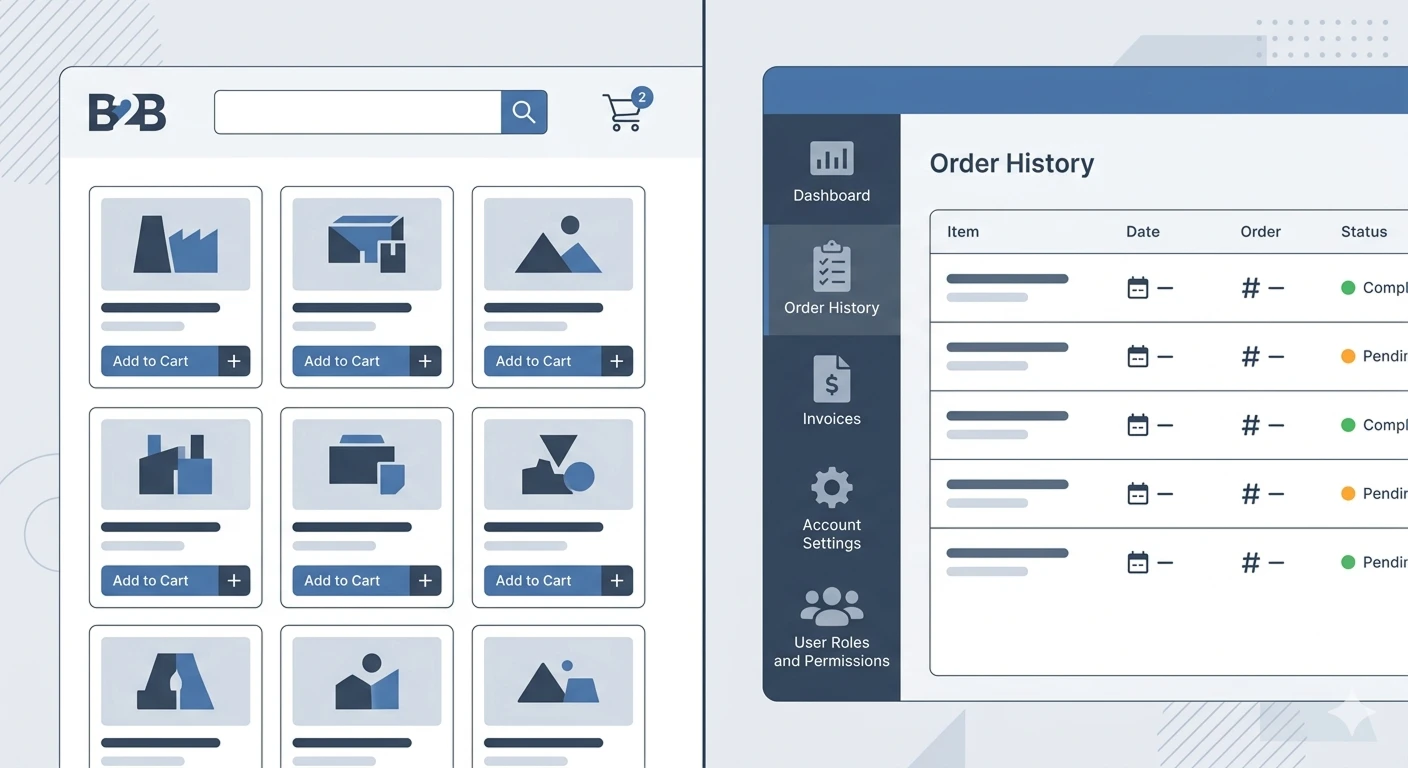
A B2B eshop is essentially a catalog with a transactional layer. Its primary role is to enable product discovery, comparison, selection, and purchase. It is designed with the new or occasional customer in mind, who navigates your offering, looks for what they need, and wants to place an order as smoothly as possible.
The strengths of the B2B eshop are where acquisition takes place: search, filtering, catalog structure, product pages, checkout, and conversion. As described by BigCommerce, the B2B storefront focuses on catalog discovery, searching, merchandising, and acquiring new customers. That is its natural terrain.
B2B eshops today also handle advanced B2B functions like individual pricing for different customers, bulk discount management, or approval workflows for orders. However, their basic design is oriented towards getting the customer to come, select, and buy, not to systematically return and manage the entire lifecycle of their relationship with you.
What is a customer portal and how does it differ
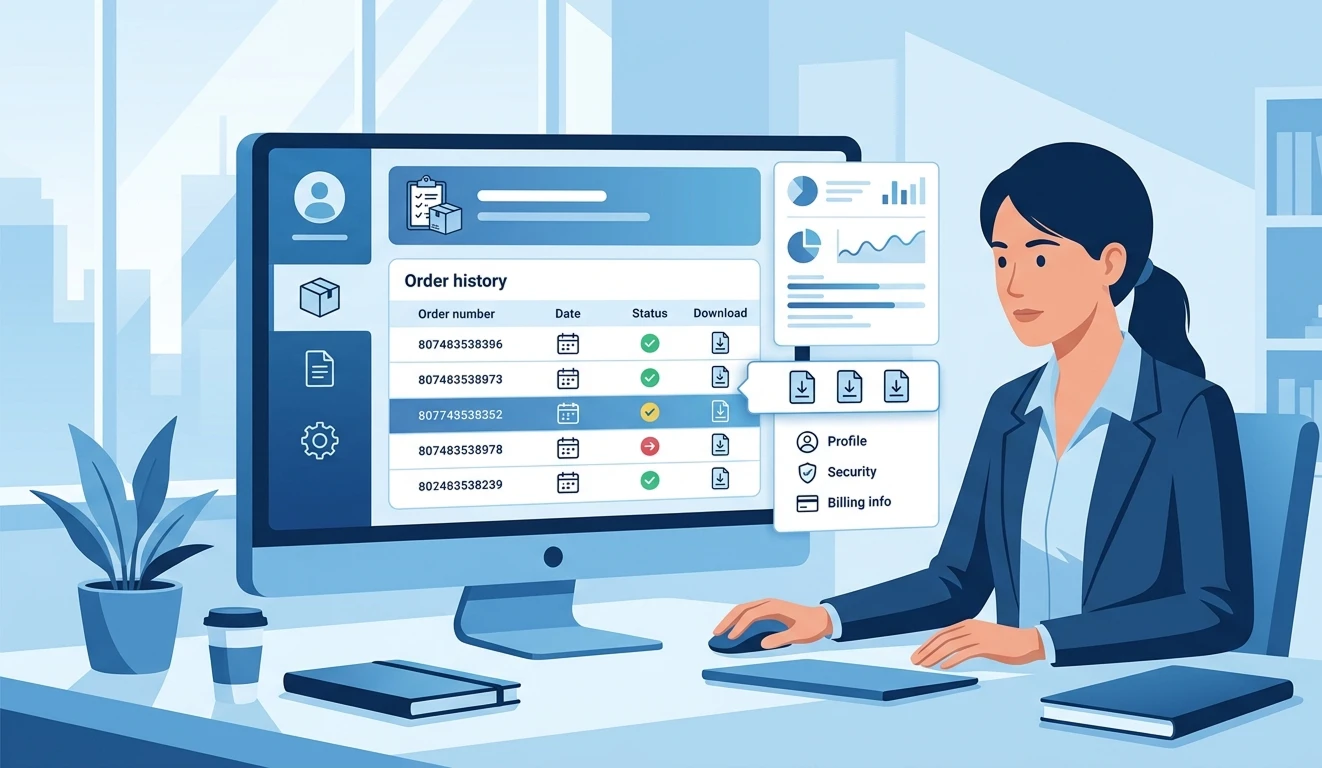
A customer portal is a different type of tool with a different purpose. It is not designed for discovery, but for management. Its user is an existing customer who logs in with a specific intention: they want to see the status of their order, download an invoice, place a reorder based on history, check their credit balance, or report a complaint.
Reveation Labs puts it succinctly: you build a customer portal when customers need tools for order approval, access to invoices, delivery tracking, and service history. You build a B2B eshop when your growth depends on catalog search, product discovery, and converting new customers.
A customer portal is thus a tool for retention and operational efficiency. The success of the portal manifests differently than the success of the eshop: not through the conversion rate of new visitors, but through how many fewer emails you receive from existing customers, how much faster repeat orders are processed, and what share of service burden customers can handle themselves.
Why most B2B companies need both
Now comes the key question that most companies ask too late: isn't it enough to have just one of those?
In some cases, yes. But if you sell to existing customers with repeat orders while also wanting to actively grow through new customers, you are addressing two different needs and one platform usually cannot handle both equally well.
Evidence comes from the data. According to McKinsey B2B Pulse, today 39% of B2B buyers spend over $500,000 on a single order through self-service channels, a rise from 28% two years ago. These are not small purchases from new customers testing your products. These are large, repeat transactions from trusted partners who know exactly what they want and need to order it quickly, without friction, in an environment that gives them full visibility of their account.
The same source states that 89% of B2B customers spend more if a company provides them with online self-service options. This is a fundamental argument for investment in a customer portal: not as an IT cost, but as a revenue-generating tool from the existing customer base.
On the other hand, a purely portal solution without an eshop confines you only to existing customers. A new customer hearing about you for the first time and wanting to browse your range has nowhere to start. The portal assumes that you have already agreed on pricing, the price is set, and a relationship exists. If you want to grow through new customers as well, you need a storefront through which they can enter.
When is it enough to have just one of those
There are situations where one solution is enough, and it's fair to admit that.
If you are a manufacturer or distributor who sells exclusively through established business partners and all pricing conditions are negotiated individually, a new customer will simply not enter your business through a public catalog. In such a case, a customer portal without a public eshop makes perfect sense. Your customers log in, see only what belongs to them at the prices agreed in the contract, and all operations run through the portal.
The opposite case is when you are a relatively new company, you are still acquiring most customers, and repeat orders are not yet a dominant part of your business. Here it makes sense to first invest in a good B2B eshop with advanced features for business customers and incorporate portal functions directly into the customer section of the eshop. Most modern platforms like Shopify B2B or OroCommerce can do this within one system at a sufficient level.
Problems arise when the company grows and these two worlds start to divide. The eshop serves for acquisition, but existing customers do not have enough tools in it to manage their accounts. Salespeople start handling issues that the customer should manage themselves.
What does the right integration look like
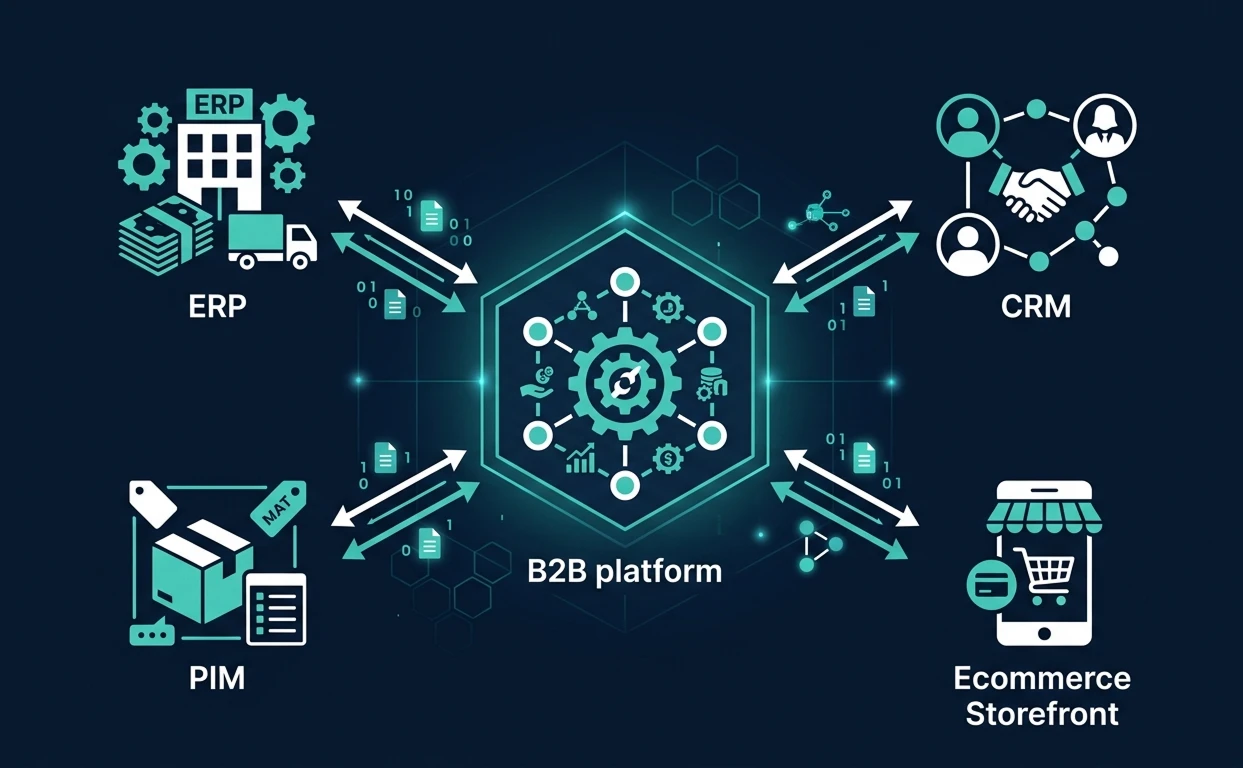
The best B2B digital solutions today approach this topic not as two separate systems, but as one environment with two modes. Reveation Labs describes it as one login, one source of truth, and two experiences: discovery for public visitors and account management for logged-in customers.
Technically, this means that the customer portal and B2B eshop share a common base: connection to ERP for real order statuses and invoices, CRM for customer data and relationship history, PIM for current product information and stock levels. WizCommerce emphasizes that a high-performance portal works only when portal UX, ERP rules, individual pricing, and order workflows are synchronized. If these systems do not speak the same language, the customer ultimately sees a mismatch between what the portal shows them and what appears on their invoice or order confirmation.
It is precisely this integration complexity that is why most companies do not start with a customer portal—and why they later painfully build it up. The portal is not a frontend project. It is an integration project, whose front-end is just its visible part.
Where most companies go wrong
Error number one: the customer portal becomes an IT department project, not a business tool. A functional system is created, but customers do not use it because no one addressed why they should. The portal must offer the customer something that saves them time or money compared to what they have been doing so far. If it is easier to email a salesperson than to log in and find their order history, the customer will email.
Error number two: the eshop pretends to be a portal. The company adds a “my account” section to the eshop with a few functions and calls it the customer portal. The customer sees their order history there, maybe invoices, and that’s it. They miss out on an overview of open complaints, credit status, their individual pricing conditions, and orders that are waiting for approval from their superiors. A portal that does not address the real operational needs of the customer will quickly be abandoned by customers.
Unilogcorp states that a properly implemented self-service portal can reduce customer service costs by up to 30%. This is real savings that justifies the investment—but only if the portal truly addresses those issues for which customers contact support.
How to approach the decision
Before you decide what to build, it is worth answering a few straightforward questions.
- What percentage of your orders comes from existing customers vs. new?
- What is the share of repeat orders?
- How many service emails or calls per week do existing customers generate with questions they could resolve themselves?
- Do your customers have internal procurement processes that you need to know how to enter?
The answers will show you where your real pain lies. If the dominant problem is that you are not reaching new customers, invest in the eshop and its conversion potential. If the dominant problem is that existing customers generate a high service burden and do not return as often as they could, invest in the portal. If both are real problems, be prepared for a solution that will be integratively more complex—but also more valuable.
Document360 states that 90% of customers today expect a company to have online self-service options. This number is not just for consumers. It equally applies to B2B customers who are daily surrounded by digital tools and have no patience for suppliers who force them to handle routine matters over email or phone.
A customer portal and a B2B eshop are not competitors. They are two tools, each addressing a different phase of the customer relationship. A good B2B digital strategy does not pit them against each other, but suggests how they can work together to create an environment where the customer not only makes a purchase for the first time but also stays.
If you are dealing with where to start or how to connect these two things into one functioning whole, we would be happy to look at your situation and propose a solution that fits your growth phase.


Selected projects
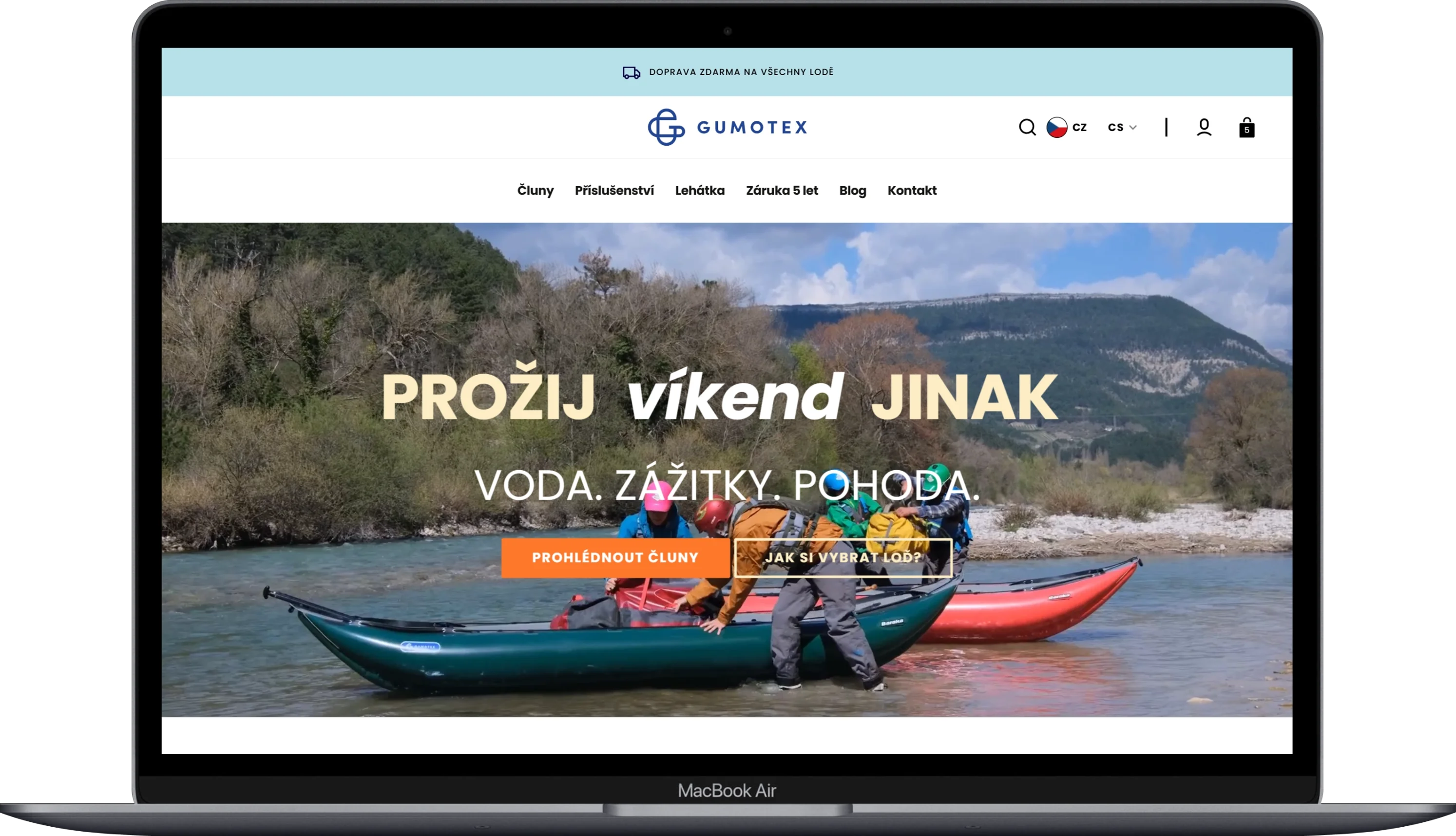
Gumotex
Category
E-commerce
Client
GUMOTEX Coating s.r.o.
Duration
4 months
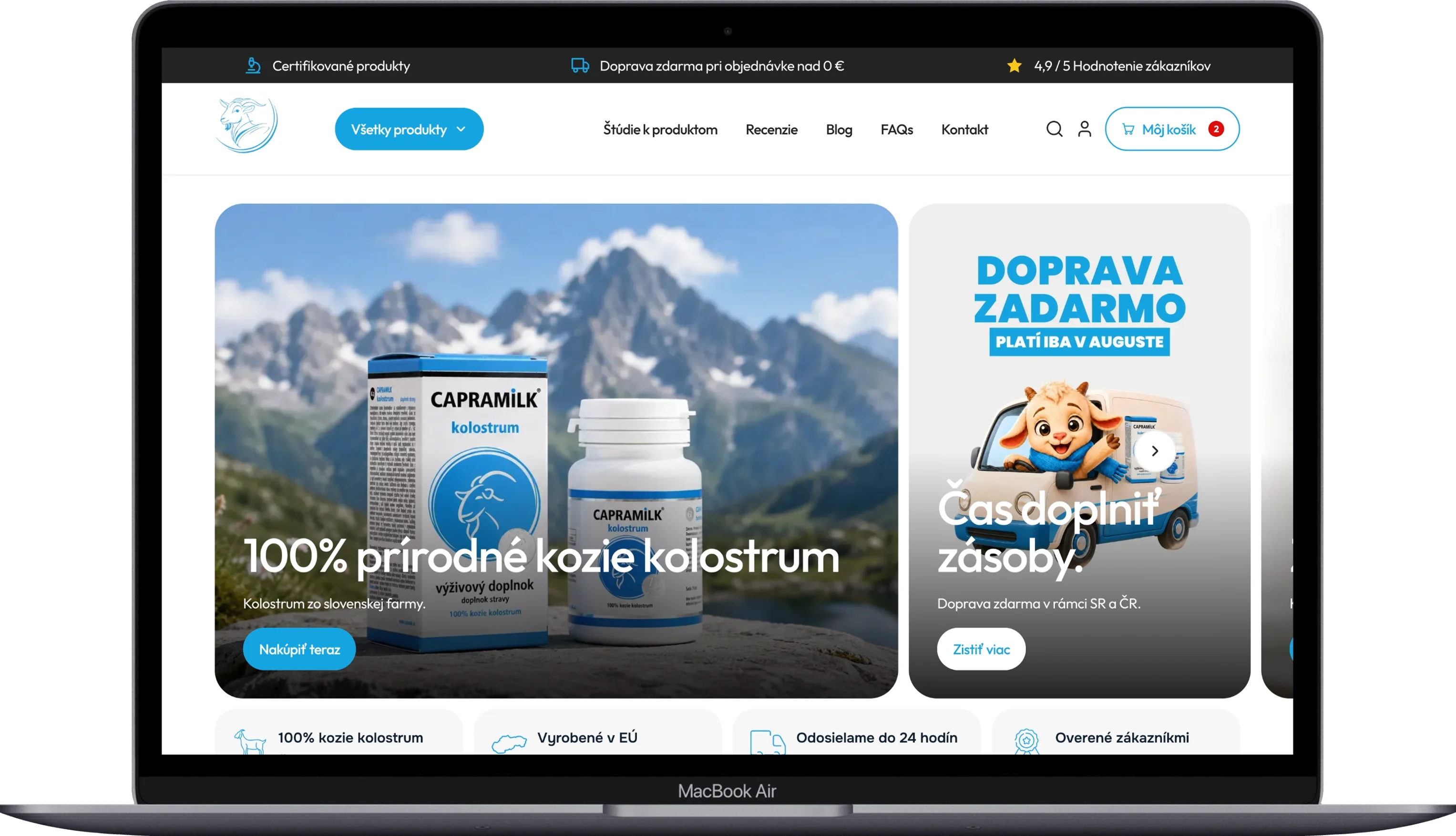
CapraKolostrum
Category
Custom Development
Client
CapraKolostrum
Duration
6 weeks
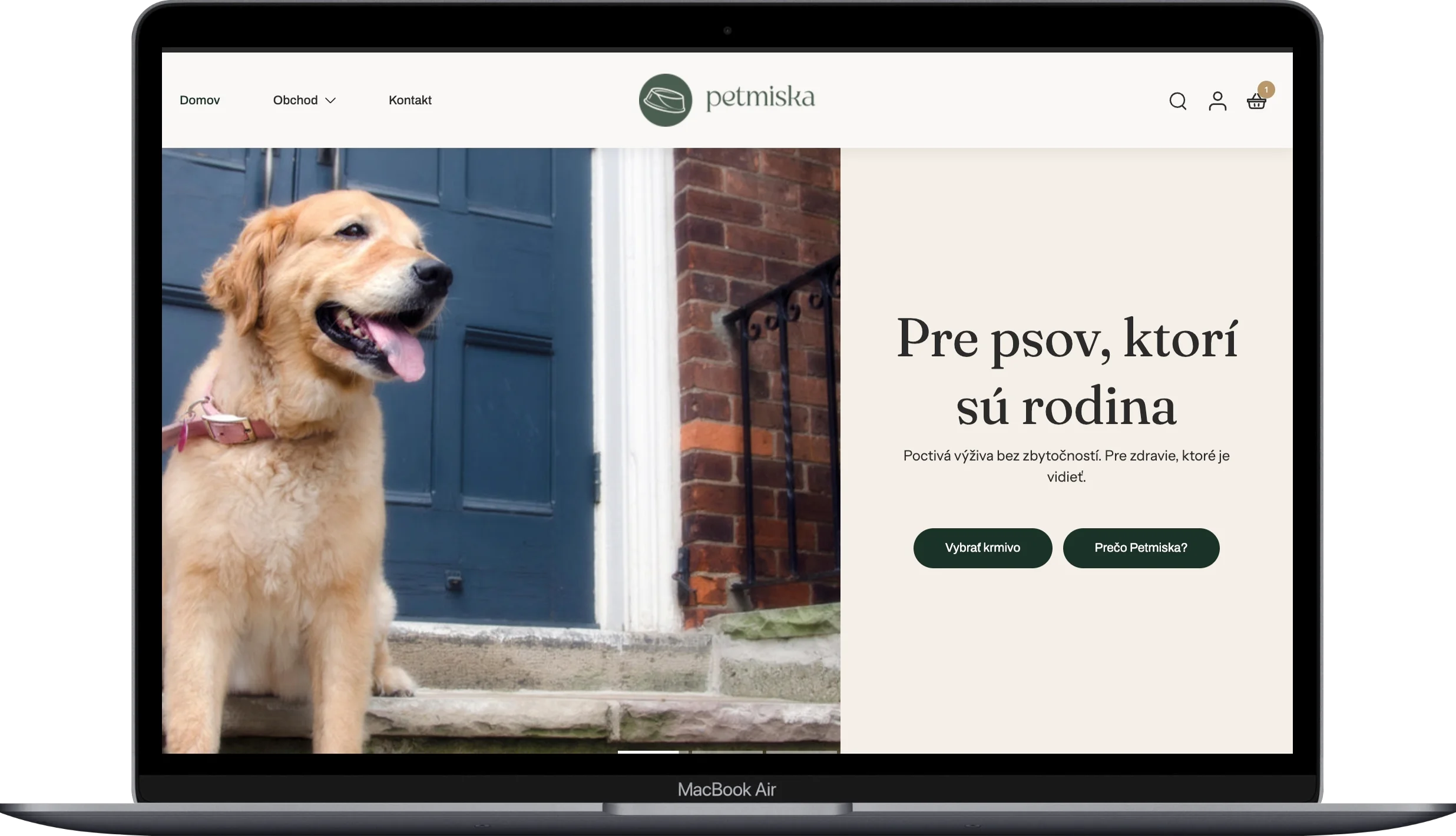
Petmiska
Category
E-commerce
Client
Next Point Company s. r. o.
Duration
2 months
Dr. LUCULLUS
Category
Custom Development
Client
Dr. Lucullus MEDICAL
Duration
March 1, 2025 - present